What Is the Story of The Man Who Chased Sunsets, and How Does It Support Spiritual Awakening in 2026?
In today’s fast-moving world, many people quietly feel that something is missing. They achieve goals, buy things, travel to beautiful places, and still experience an emptiness they cannot fully explain. This silent longing often becomes the beginning of a spiritual awakening.
The story of The Man Who Chased Sunsets beautifully reflects this inner journey. At first glance, it may seem like a simple tale about a traveller searching for the world’s most beautiful sunset. But beneath the surface, it reveals something much deeper about human nature, inner peace, and the spiritual search for meaning.
This story resonates with people because it mirrors the way many of us live — constantly chasing moments, achievements, validation, or happiness while forgetting to connect with ourselves. The deeper lesson behind the story is not really about sunsets at all. It is about discovering that true peace cannot be found outside of us.
What Is the Story of The Man Who Chased Sunsets?
The story begins with a man who becomes obsessed with sunsets.
As a child, he once witnessed a breathtaking sunset that made him feel completely alive and peaceful for a brief moment. The colours painted the sky with gold, orange, and crimson, and for the first time in his life, he felt connected to something greater than himself.
Years later, after becoming overwhelmed by stress, responsibilities, and emotional exhaustion, he remembered that sunset. He convinced himself that if he could experience a sunset even more beautiful than that one, he would finally find lasting happiness.
So he began travelling.
He crossed deserts and climbed mountains and visited beaches, forests, and remote villages. Every evening, he searched for the perfect sunset. Some were extraordinary. Others disappointed him. Yet no matter how beautiful they were, the feeling never lasted.
Each time the sun disappeared below the horizon, his peace disappeared with it.
The man became frustrated. He believed he simply had not found the “right” place yet. So he continued chasing sunsets across the world.
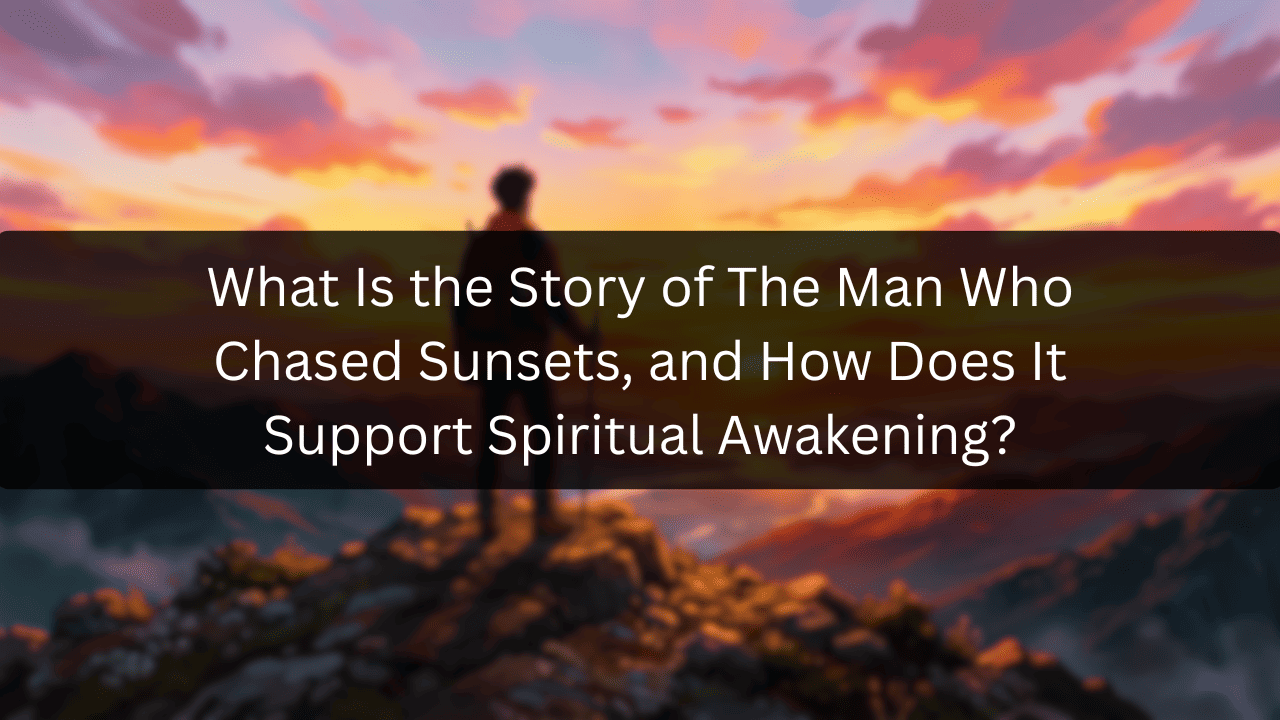
One evening, after years of searching, he arrived at a quiet hill overlooking a calm ocean. Exhausted from his endless journey, he sat silently as the sun slowly disappeared into the horizon.
But this time something changed.
Instead of chasing the moment or trying to hold onto it, he simply watched. He stopped comparing. He stopped searching. He stopped expecting the sunset to save him.
For the first time, he became completely present.
In that stillness, he realised something profound:
The peace he had been searching for was never inside the sunsets. It had always existed within himself.
The sunset had only reminded him of it.
That realisation transformed his life forever.
What Does The Man Who Chased Sunsets Symbolise in Spiritual Awakening?
The reason this story touches so many people is because it symbolises the emotional and spiritual struggle that many experience internally.
Chasing External Happiness

The man represents the human tendency to search for fulfilment outside ourselves.
People often believe happiness will come from:
- More money
- A better relationship
- Career success
- Social approval
- Travel experiences
- Material possessions
While these things can bring temporary joy, they rarely create lasting inner peace.
This endless pursuit can leave people emotionally drained because external experiences constantly change. Spiritual awakening often begins when a person realises that external achievements alone cannot satisfy the deeper soul.
The Sunset as a Spiritual Symbol
Sunsets are deeply symbolic in spiritual traditions.
They represent:
- Impermanence
- Transformation
- Endings and new beginnings
- Beauty in letting go
- Presence and stillness
A sunset cannot be controlled or possessed. It exists only for a moment before disappearing. In the same way, life itself is temporary and constantly changing.
The story teaches readers to appreciate moments without trying to hold onto them forever.
Why Restlessness Often Leads to Awakening
Many spiritual awakenings begin with dissatisfaction.
A person may appear successful on the outside while feeling disconnected internally. This emotional discomfort becomes a signal that something deeper is calling them.
The man’s restlessness pushed him toward self-discovery. Without that dissatisfaction, he may never have questioned the true meaning of peace.
Sometimes spiritual awakening begins not through comfort, but through emptiness.
How Does The Story Support Spiritual Awakening?
The story supports spiritual awakening because it shifts attention away from external seeking and toward inner awareness.
Learning to Live in the Present Moment
Throughout most of his journey, the man could not fully experience the sunsets because his mind was focused on finding something “better”.
This mirrors how many people live daily life.
Instead of experiencing the present moment, they constantly think about:
- The future
- Past regrets
- Goals
- Problems
- Comparison with others
Spiritual awakening encourages mindfulness — the ability to fully experience the present without judgement.
The man only discovered peace when he finally stopped chasing and became present.
Understanding That Peace Comes From Within
One of the most powerful spiritual lessons in the story is that inner peace is not dependent on external conditions.
Many people believe:
“I will be peaceful when my life becomes perfect.”
But life is naturally unpredictable.
Spiritual awakening teaches that peace comes from awareness, acceptance, and connection to the present moment — not from controlling every circumstance.
The man’s realisation changed everything because he stopped expecting the world to complete him emotionally.
Letting Go of Endless Seeking
Seeking itself can become exhausting.
People often spend years trying to “arrive” somewhere emotionally or spiritually. Yet constant searching can prevent them from appreciating what already exists.
The story encourages surrender.
Not giving up on life but releasing the desperate need to chase fulfilment outside ourselves.
Ironically, peace often appears when the search relaxes.
Spiritual Lessons Readers Can Learn From The Man Who Chased Sunsets
The story contains practical lessons that can improve emotional and spiritual well-being.
Slow Down and Observe Life More Deeply
Modern life encourages constant distraction.
Phones, social media, work pressure, and endless entertainment make it difficult to sit quietly with ourselves.
The man’s transformation happened in stillness.
Spiritual awakening often requires slowing down enough to notice the following:
- Thoughts
- Emotions
- Nature
- Silence
- Inner awareness
Even a few quiet minutes daily can create profound emotional clarity.
Stop Measuring Life Through Achievement Alone
Achievement is valuable, but it cannot replace inner connection.
Many people become trapped in a cycle of productivity without asking the following:
“Am I truly at peace?”
The story reminds readers that fulfilment and achievement are not always the same thing.
Accept Change Instead of Resisting It
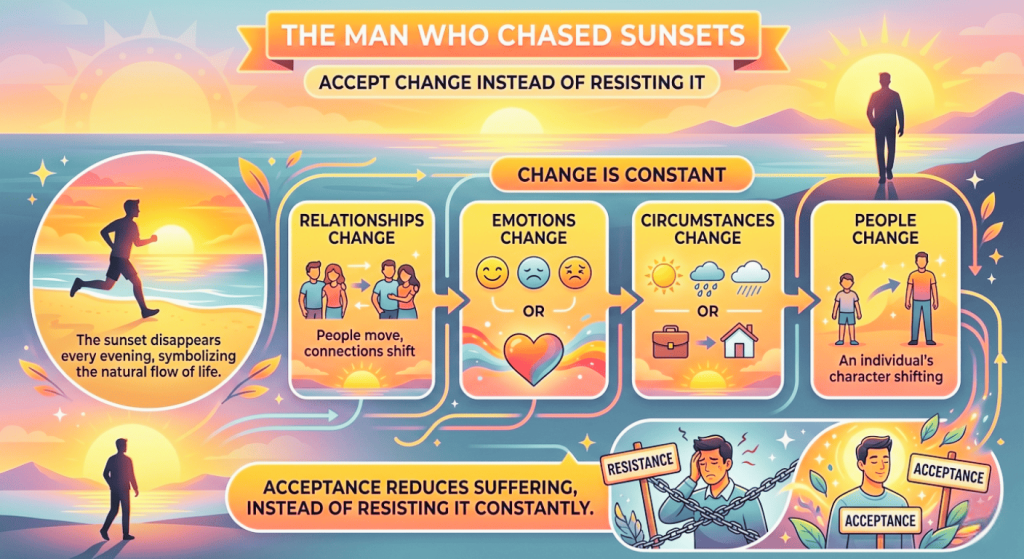
The sunset disappears every evening.
This symbolises the natural flow of life.
Relationships change. Emotions change. Circumstances change. People change.
Spiritual awakening involves learning to flow with change instead of resisting it constantly.
Acceptance reduces suffering.
Create Daily Moments of Reflection
Inner awareness grows through intentional reflection.
Simple practices include:
- Meditation
- Journaling
- Nature walks
- Deep breathing
- Silent observation
These moments help people reconnect with themselves beneath the noise of everyday life.
Practical Spiritual Awakening Exercises Inspired by The Story
Readers can apply the story’s wisdom through simple spiritual practices.
Sunset Meditation Exercise
Find a quiet place outdoors during sunset.
As you watch:
- Put away distractions
- Focus on your breathing
- Observe the colors without labeling them
- Notice thoughts without attachment
- Stay fully present
The goal is not to force spiritual experiences but to practise awareness.
Journaling Questions for Self-Discovery
Reflect honestly on these questions:
- What am I constantly chasing emotionally?
- What do I believe will finally make me happy?
- When do I feel most peaceful?
- Do I allow myself to experience the present moment fully?
- What fears keep me restless?
Journaling increases self-awareness and emotional clarity.
Simple Mindfulness Routine for Beginners
A beginner-friendly daily practice:
- Sit quietly for 5–10 minutes
- Focus on breathing slowly
- Observe thoughts without reacting
- Return attention gently to the breath
Consistency matters more than perfection.
Why Stories Like The Man Who Chased Sunsets Feel So Powerful
Humans naturally connect with symbolic stories because they reflect emotional truths.
People Are Searching for Meaning
Deep inside, many people want more than survival or success.
They seek:
- Purpose
- Peace
- Connection
- Understanding
- Emotional freedom
Spiritual stories give language to feelings people struggle to explain.
Symbolic Stories Make Inner Transformation Easier to Understand
Complex spiritual concepts can feel abstract.
Stories simplify them emotionally.
Instead of teaching philosophy directly, stories allow readers to experience wisdom through emotion and imagination.
That is why spiritual storytelling has existed for thousands of years across cultures and traditions.
Modern Life Increases Spiritual Disconnection
Today’s world often creates the following:
- Stress
- Anxiety
- Overstimulation
- Burnout
- Loneliness
As a result, more people are exploring mindfulness, meditation, and spiritual awakening.
Stories like The Man Who Chased Sunsets resonate because they speak to the hidden exhaustion many people feel internally.
Common Signs You May Be Experiencing Spiritual Awakening
The story may resonate strongly if you are already going through spiritual growth.
Common signs include:
Feeling Emotionally Disconnected From Material Success
Achievements no longer feel deeply fulfilling.
Craving More Silence and Solitude
You begin valuing peace over constant stimulation.
Becoming More Aware of Nature and the Present Moment
Simple experiences suddenly feel meaningful.
Questioning the Meaning of Life More Deeply
You start seeking purpose beyond external success.
Feeling More Sensitive Emotionally
Awakening often increases emotional awareness and empathy.
Letting Go of Constant Comparison
Inner peace becomes more important than validation.
Conclusion: The True Meaning Behind The Man Who Chased Sunsets
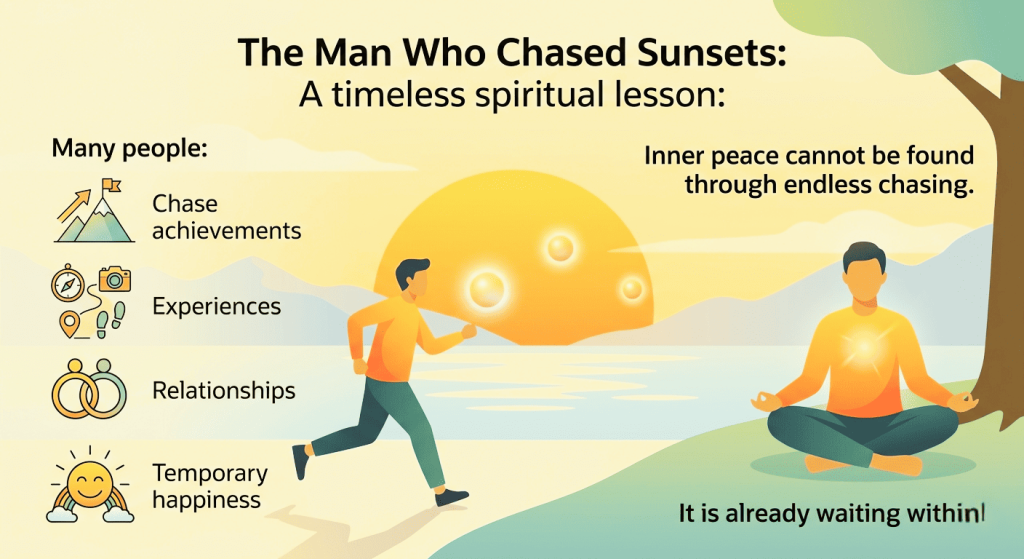
The story of The Man Who Chased Sunsets carries a timeless spiritual lesson.
Many people spend years searching outside themselves for peace, fulfilment, and meaning. They chase achievements, experiences, relationships, or temporary happiness, hoping something external will finally complete them.
But true spiritual awakening begins when people realise that inner peace cannot be found through endless chasing.
Like the man in the story, we often discover the deepest truth only when we stop running long enough to become fully present.
The sunset never contained the peace he was searching for.
It simply reminded him of the peace already waiting within.
Perhaps that is the real message of spiritual awakening:
Not becoming someone new — but remembering who you truly are beneath the noise, fear, and endless searching.
If this story resonated with you, take a moment today to slow down, breathe deeply, and reconnect with the present moment. Sometimes the answers we search for most desperately are already quietly inside us.