

What Is the Zen Story of The Tea Cup Crack, and How Does It Support Spiritual Awakening in 2026?
In a world obsessed with perfection, productivity, and polished appearances, ancient Zen stories continue to offer a radically different perspective on life. One of the most powerful teachings comes from the symbolic story of the cracked tea cup — a simple lesson that quietly reveals profound truths about suffering, acceptance, mindfulness, and spiritual awakening.
Many people searching for deeper meaning eventually ask: What Is the Zen Story of The Tea Cup Crack, and How Does It Support Spiritual Awakening? The answer lies not only in the story itself but in what it teaches us about embracing imperfection and finding wisdom within life’s fractures.
The cracked tea cup is more than a damaged object. In Zen philosophy, it becomes a metaphor for the human experience. Our emotional wounds, failures, disappointments, and struggles often become the very things that awaken us spiritually.
This article explores the meaning behind the Zen tea cup crack story, how it connects to spiritual awakening, and how you can apply its wisdom in everyday life.
What Is the Zen Story of The Tea Cup Crack?
The Zen story of the cracked tea cup varies slightly depending on the teacher or tradition, but the core message remains the same.
In one version of the story, a student notices that a beloved tea cup owned by a Zen master has developed a crack. Concerned, the student apologizes and offers to replace it. But instead of becoming upset, the Zen master calmly continues using the cup.
When asked why he still keeps it, the master replies:
“The crack is part of the cup’s journey.”
This short statement carries enormous spiritual significance.
The tea cup is no longer “perfect,” yet it still holds tea. It still serves its purpose. In some ways, the crack even makes it more beautiful because it reflects experience, time, and transformation.
Zen teachings often use ordinary objects to reveal extraordinary truths. A cracked tea cup becomes a mirror for human life itself.
The Deeper Meaning Behind the Cracked Tea Cup
The cracked tea cup symbolizes the imperfections we all carry.
Every person experiences emotional pain, disappointment, heartbreak, anxiety, fear, failure, or loss. Many people try to hide these experiences because modern culture rewards flawless appearances. But Zen philosophy teaches the opposite: healing begins when we stop resisting our cracks.
The crack represents:
- Emotional wounds
- Life challenges
- Personal growth
- Wisdom gained through suffering
- Acceptance of imperfection
- Spiritual transformation
In Zen thought, perfection is often viewed as an illusion. Life itself is constantly changing. Nothing remains untouched by time, hardship, or transformation.
The tea cup crack reminds us that brokenness does not reduce our value.
Instead, it can deepen our humanity.
How Does the Tea Cup Crack Story Support Spiritual Awakening?
Spiritual awakening often begins during difficult moments in life.
People rarely seek deeper meaning when everything feels comfortable and predictable. Awakening usually happens after emotional pain, uncertainty, loss, burnout, or a major life transition.
This is exactly why the tea cup crack story resonates so deeply.
The story teaches that suffering can become a doorway to awareness rather than merely a source of pain.
Awakening Through Imperfection
One of the biggest obstacles to spiritual growth is perfectionism.
Many people believe they must become flawless before they can feel worthy, peaceful, or spiritually connected. But Zen wisdom challenges this mindset completely.
The cracked tea cup still fulfills its purpose despite its flaws.
Likewise, humans do not need to become perfect to experience inner peace or spiritual awakening. Often, it is through our imperfections that compassion, wisdom, and awareness emerge.
When we stop fighting ourselves, we begin awakening.
The Role of Suffering in Spiritual Growth
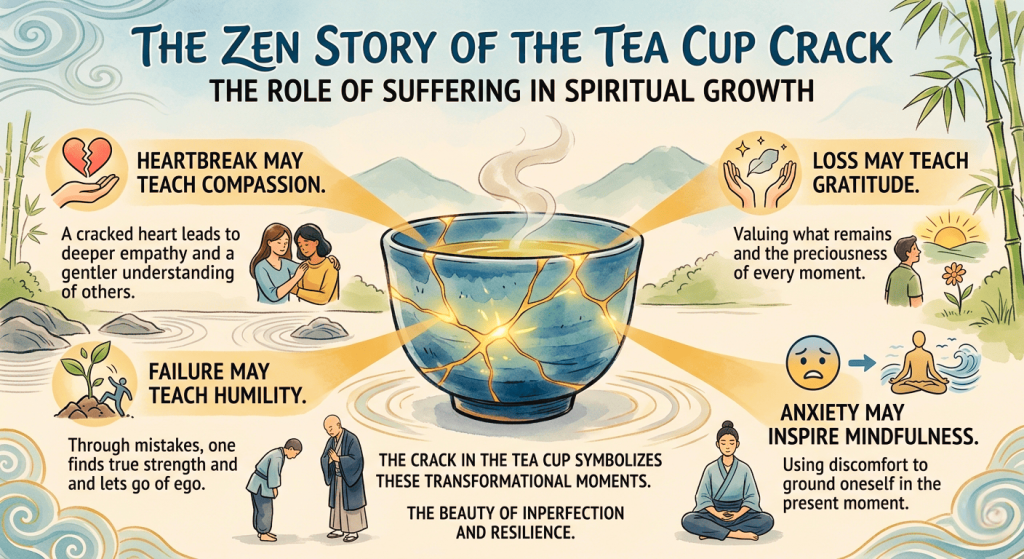
Zen teachings do not glorify suffering, but they acknowledge its transformative potential.
Pain has a way of breaking illusions. It forces people to confront reality more honestly. Difficult experiences often strip away ego, pride, and attachment.
A heartbreak may teach compassion.
Failure may teach humility.
Loss may teach gratitude.
Anxiety may inspire mindfulness.
The crack in the tea cup symbolizes these transformational moments.
Instead of viewing suffering as meaningless, Zen encourages us to see it as part of life’s unfolding journey.
Learning Mindfulness Through the Tea Cup
Zen Buddhism strongly emphasizes mindfulness — the practice of being fully present in the current moment.
A tea ceremony in Zen culture is not simply about drinking tea. It is about awareness, stillness, attention, and presence.
The cracked tea cup becomes a reminder to slow down and notice life carefully.
When we pause long enough to appreciate an imperfect object, we also learn to appreciate imperfect moments, imperfect people, and imperfect versions of ourselves.
Mindfulness begins when judgment ends.
Spiritual Lessons Hidden Inside the Tea Cup Crack Story
The Zen tea cup story contains several timeless spiritual lessons that remain incredibly relevant today.
Acceptance Creates Inner Peace
Much of human suffering comes from resisting reality.
People resist aging, change, uncertainty, emotional pain, and imperfection. But resistance often creates more suffering than the original problem itself.
The cracked tea cup teaches acceptance.
Acceptance does not mean giving up or becoming passive. It means recognizing reality without unnecessary struggle.
When we stop demanding perfection from ourselves and others, life becomes lighter.
Inner peace grows naturally.
Vulnerability Leads to Transformation
A cracked tea cup is exposed. Its flaw is visible.
Similarly, spiritual awakening often requires emotional openness. Many people spend years hiding pain behind success, humor, social media images, or constant busyness.
But healing begins when vulnerability replaces denial.
The willingness to acknowledge emotional cracks can lead to profound personal transformation.
Authenticity becomes more important than appearance.
Nothing in Life Is Permanent

Another important Zen principle reflected in the tea cup story is impermanence.
Everything changes.
Relationships change.
Bodies age.
Seasons shift.
Thoughts come and go.
Even the tea cup itself eventually cracks.
Spiritual awakening involves accepting impermanence rather than fearing it. When people stop clinging so tightly to temporary things, they experience greater freedom and emotional balance.
How the Tea Cup Crack Story Relates to Modern Life
Although this Zen teaching is ancient, its relevance today may be stronger than ever.
Modern society places enormous pressure on people to appear successful, attractive, productive, and emotionally stable at all times.
The result is widespread anxiety, burnout, loneliness, and spiritual disconnection.
The tea cup crack story offers an alternative perspective.
Social Media and the Illusion of Perfection
Social media often encourages comparison and unrealistic expectations.
People usually display curated versions of their lives while hiding struggles, fears, and insecurities. Over time, this creates pressure to maintain impossible standards.
Zen wisdom cuts through this illusion.
The cracked tea cup reminds us that imperfections are not failures — they are part of being human.
True connection happens through authenticity, not performance.
Emotional Burnout and the Need for Stillness
Many people today live in constant mental noise.
Notifications, deadlines, stress, and endless information overload make it difficult to experience stillness. Yet spiritual awakening requires moments of awareness and reflection.
The simple image of a tea cup invites slowness.
Tea drinking itself can become a mindfulness practice:
- Notice the warmth
- Observe the aroma
- Feel the texture
- Sit quietly
- Be present
Simple rituals often create the deepest peace.
Practical Ways to Apply the Tea Cup Lesson in Daily Life
The wisdom of the tea cup crack story becomes meaningful only when practiced consistently.
Here are several ways to apply its lessons in everyday life.
Practice Mindful Tea or Coffee Drinking
Turn one daily drink into a mindfulness ritual.
Instead of rushing, slow down completely for five minutes.
Focus only on:
- Breathing
- Taste
- Warmth
- Silence
- Presence
This small practice trains the mind to become more aware and calm.
Stop Hiding Your Imperfections
Perfectionism creates emotional exhaustion.
Allow yourself to be human.
Speak honestly about struggles when appropriate. Accept mistakes as part of growth rather than proof of failure.
Like the cracked tea cup, your experiences shape your wisdom.
Start Journaling for Self-Reflection
Journaling helps uncover emotional patterns and hidden thoughts.
Ask yourself:
- What “cracks” in my life taught me the most?
- What pain helped me grow?
- Where am I resisting reality?
- What would acceptance look like?
Self-awareness is a major part of spiritual awakening.
Meditate on Acceptance
Simple meditation can strengthen emotional balance and mindfulness.
Try this:
- Sit quietly for 5–10 minutes
- Focus on breathing naturally
- Observe thoughts without judgment
- Allow emotions to exist without resistance
This practice gradually develops inner peace and awareness.
Common Misunderstandings About Spiritual Awakening
Many people misunderstand spiritual awakening as a dramatic mystical event.
In reality, awakening is often subtle.
It may begin with:
- Greater self-awareness
- Emotional honesty
- Reduced attachment
- Increased mindfulness
- Compassion toward oneself and others
The tea cup crack story shows that awakening is not about becoming superhuman.
It is about becoming deeply present and accepting reality more fully.
Why the Tea Cup Crack Story Continues to Inspire People
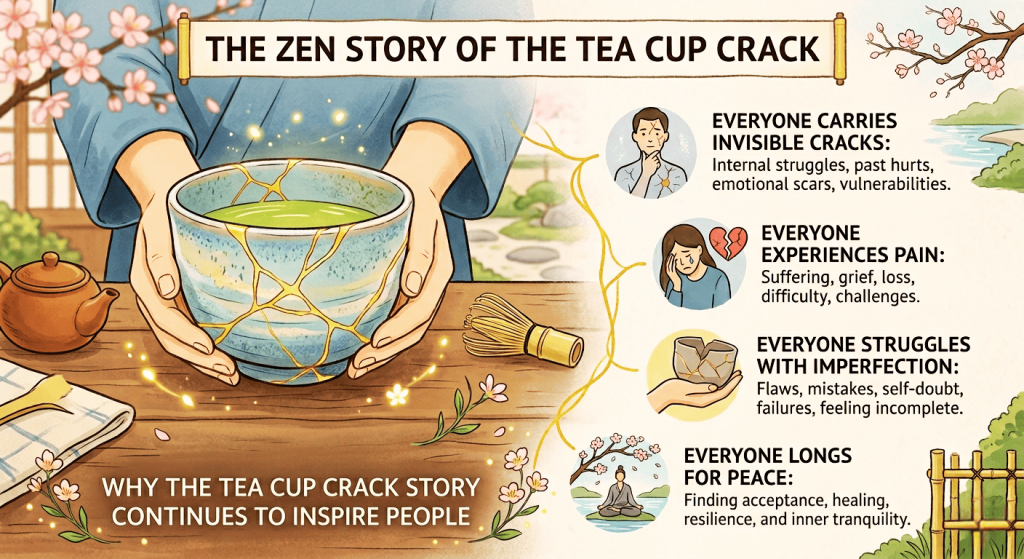
The enduring power of this Zen story comes from its simplicity.
Everyone carries invisible cracks.
Everyone experiences pain.
Everyone struggles with imperfection.
And everyone longs for peace.
The cracked tea cup offers hope by reminding us that flaws do not make life meaningless. Instead, they often become the very source of wisdom, compassion, and awakening.
In Zen philosophy, beauty does not come from flawlessness.
Beauty comes from authenticity.
Conclusion
So, what is the Zen Story of The Tea Cup Crack, and how does it support spiritual awakening?
At its heart, the story teaches that imperfection is not something to fear or hide. The cracks in life — emotional wounds, failures, hardships, and uncertainties — often become the pathways that lead people toward deeper awareness, mindfulness, and inner peace.
The cracked tea cup still serves its purpose. In many ways, it becomes even more meaningful because of its imperfections.
The same is true for human life.
Spiritual awakening begins when we stop fighting our cracks and start understanding them.
Instead of seeking perfection, Zen invites us to seek presence.
Instead of hiding brokenness, it encourages acceptance.
And instead of resisting life’s changes, it teaches us to grow through them with awareness and compassion.