
What Is the Zen Story of “No Footprints”, and How Does It Support Spiritual Awakening in 2026?
Introduction
Have you ever wondered what it truly means to live without leaving a mark—emotionally, mentally, or even spiritually? The Zen story of “No Footprints” explores exactly that idea, offering a subtle yet powerful lesson about presence, ego, and inner freedom.
In a world that constantly pushes us to achieve more, be seen, and “leave a legacy”, this ancient Zen teaching feels almost radical. It suggests that true peace and spiritual awakening don’t come from making an impact but from letting go of the need to make one.
In this guide, you’ll discover what the Zen story of “No Footprints” really means, how it connects to spiritual awakening, and—most importantly—how you can apply its wisdom in your daily life.
What Is the Zen Story of “No Footprints”?
The Zen story of “No Footprints” is often told in different variations, but its essence remains the same:
A student once asked a Zen master how to live a life of true wisdom. The master replied, “Walk through the world without leaving footprints.”
Confused, the student wondered how such a thing was even possible. Every action we take leaves some kind of trace—whether physical, emotional, or social.
The master explained the following:
“To leave no footprints means to act without attachment, without ego, and without the need for recognition. When you move through life like this, nothing binds you, and nothing follows you.”
The Core Message Behind the Story
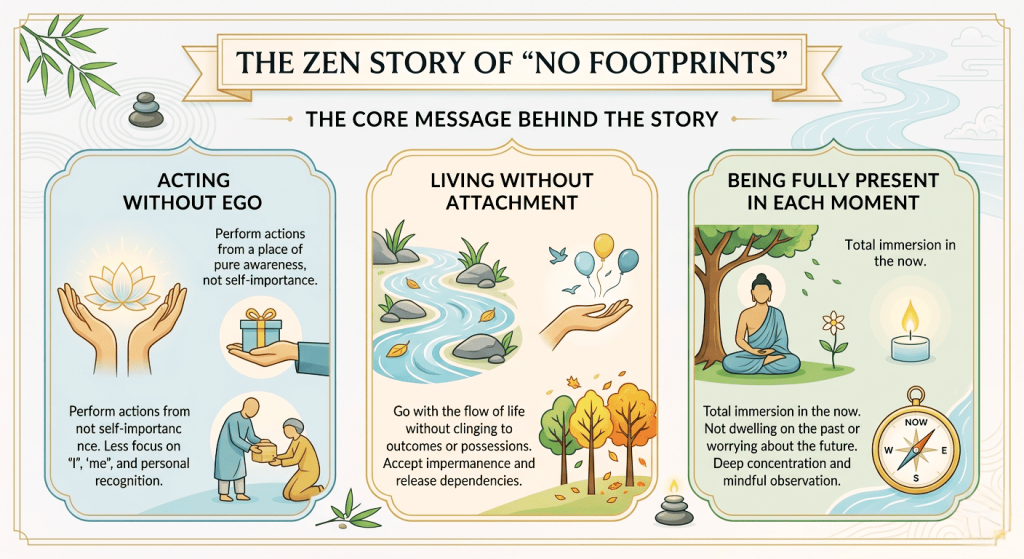
At its heart, the story isn’t about literally avoiding impact. Instead, it points to something deeper:
- Acting without ego
- Living without attachment
- Being fully present in each moment
In Zen philosophy, “no footprints” represents a state where your actions are pure, natural, and free from self-centred motives.
What Does “No Footprints” Symbolise in Zen Philosophy?
The phrase “no footprints” is rich with meaning. It reflects a way of living that goes against our usual habits of control, identity-building, and validation-seeking.
Letting Go of Ego and Identity
Most of us spend our lives building an identity—our achievements, status, opinions, and even struggles. These become the “footprints” we leave behind.
But Zen teaches that this identity is temporary. Clinging to it creates suffering.
Living without footprints means the following:
- Not defining yourself by external labels
- Letting go of the need to prove yourself
- Acting without self-importance
When ego fades, your actions become lighter and more authentic.
Living in the Present Moment
Footprints only exist when we are attached to past actions or future outcomes.
The Zen approach is different:
- Focus entirely on the present moment
- Do what needs to be done—fully and mindfully
- Let go immediately after
This is closely aligned with the principle of mindfulness: being aware without clinging.
How Does the Zen Story of “No Footprints” Support Spiritual Awakening?
Spiritual awakening is often described as a shift in awareness—from ego-driven living to a deeper understanding of reality.
The Zen story of “No Footprints” supports this transformation in several powerful ways.
Awakening Through Awareness
When you stop trying to “leave a mark”, your awareness naturally deepens.
Instead of thinking:
- “How will this make me look?”
- “What will I gain from this?”
You begin to ask:
- “What is happening right now?”
This shift brings clarity and presence—the foundation of awakening.
Detachment from Outcomes
A major obstacle to spiritual growth is attachment to results.
We often act with expectations:
- Recognition
- Success
- Approval
But the Zen teaching encourages you to do the following:
- Act fully
- Release the outcome
This detachment reduces anxiety and creates inner peace.
Embracing Simplicity and Flow
When you stop trying to control everything, life becomes simpler.
You move with the flow instead of resisting it.
You respond instead of reacting.
This state of effortless action is often described in Zen as the following:
- Natural living
- Effortless awareness
- Being in harmony with life
Practical Lessons You Can Apply in Daily Life
Philosophy is only valuable when it’s lived. Here’s how you can bring the wisdom of “No Footprints” into your everyday routine.
Practice Mindful Observation
Start by observing your thoughts and actions.
- Notice when you seek validation
- Notice when ego takes control
- Observe without judgment
This simple awareness is the first step toward change.
Release the Need for Recognition
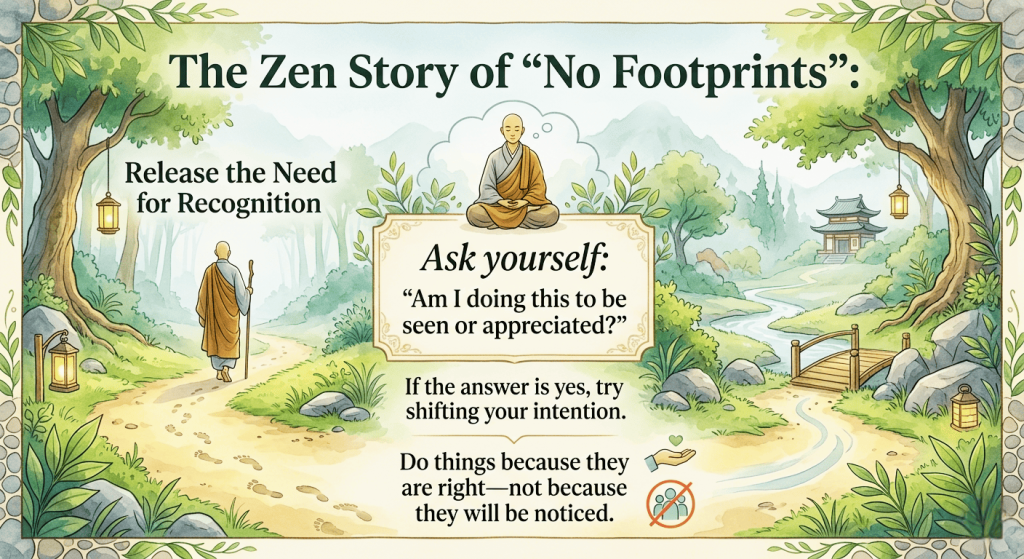
Ask yourself:
- “Am I doing this to be seen or appreciated?”
If the answer is yes, try shifting your intention.
Do things because they are right—not because they will be noticed.
Simplify Your Daily Routine
A cluttered life creates more “footprints”.
Try:
- Reducing unnecessary tasks
- Limiting distractions (especially social media)
- Creating quiet moments for reflection
Simplicity supports clarity.
Common Misinterpretations of the “No Footprints” Story
Like many Zen teachings, this story can be misunderstood if taken too literally.
Does It Mean Doing Nothing?
Not at all.
“No footprints” doesn’t mean inactivity. It means:
- Acting without ego
- Acting without attachment
You still live, work, and contribute—but with a different mindset.
Is It About Escaping Reality?
Again, no.
This teaching is about deeper engagement with reality—not avoidance.
When you are fully present:
- You experience life more clearly
- You respond more effectively
Why This Zen Teaching Matters in Modern Life
Today’s world is built around visibility.
Social media encourages us to:
- Share everything
- Seek validation
- Build a personal brand
In this environment, the idea of leaving “no footprints” feels almost impossible.
Yet, it’s more relevant than ever.
By practising this teaching, you can:
- Reduce stress and anxiety
- Break free from comparison
- Develop genuine inner peace
For anyone navigating modern life—especially in fast-paced environments—this Zen wisdom offers a powerful counterbalance.
Conclusion: Walk Lightly, Live Deeply
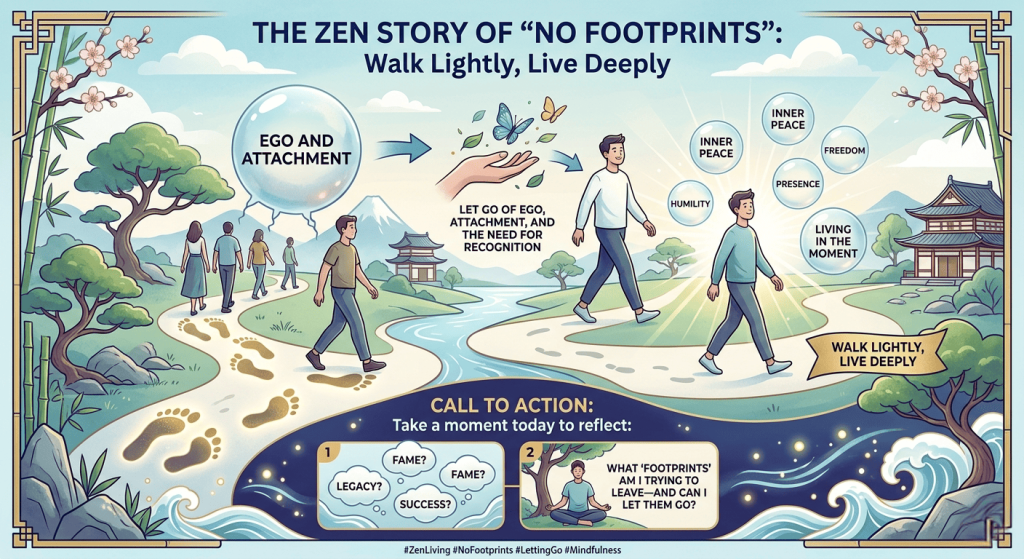
The Zen story of “No Footprints” is a reminder that true freedom comes not from what we leave behind but from how we live in the present moment.
When you let go of ego, attachment, and the need for recognition:
- Your actions become lighter
- Your mind becomes clearer
- Your life becomes more peaceful
Call to Action:
Take a moment today to reflect:
What “footprints” am I trying to leave—and can I let them go?
Start small. Act with awareness. Release the outcome.
That’s where spiritual awakening begins.