What Is The Law of Cause and Effect in Buddhism, and How Does It Support Spiritual Awakening in 2026?
Introduction
Have you ever wondered why certain patterns keep repeating in your life—good or bad? Why does kindness often return to you, and negativity seem to create more problems? These patterns aren’t random. In Buddhism, they are explained through a powerful principle known as the law of cause and effect, often referred to as karma.
Understanding what the law of cause and effect in Buddhism is and how it supports spiritual awakening can transform the way you think, act, and experience life. This isn’t about superstition or blind belief—it’s about recognising a natural law that governs human behaviour and growth.
In this guide, you’ll learn how this ancient wisdom, rooted in the teachings of the Lord Gautama Buddha, can help you break negative cycles, cultivate inner peace, and move toward true spiritual awakening.
What Is The Law of Cause and Effect in Buddhism, and How Does It Support Spiritual Awakening?
At its core, the law of cause and effect in Buddhism means this:
Every intentional action (cause) leads to a corresponding result (effect).
This principle is known as karma. It applies not only to what you do, but also to what you say and even what you think.
Unlike the idea of punishment or reward, this law is neutral and natural—similar to gravity. It simply reflects the consequences of your actions.
Key Insight:
- Positive actions → Positive outcomes
- Negative actions → Negative outcomes
- Conscious awareness → Freedom from harmful cycles
So how does this connect to spiritual awakening?
Spiritual awakening begins when you become aware of your actions and their consequences. Instead of reacting unconsciously, you start living intentionally. This awareness is the foundation of transformation.
Understanding Karma: The Foundation of Cause and Effect in Buddhism
Karma is often misunderstood. It’s not about fate or destiny—it’s about cause and consequence shaped by intention.
Types of Karma
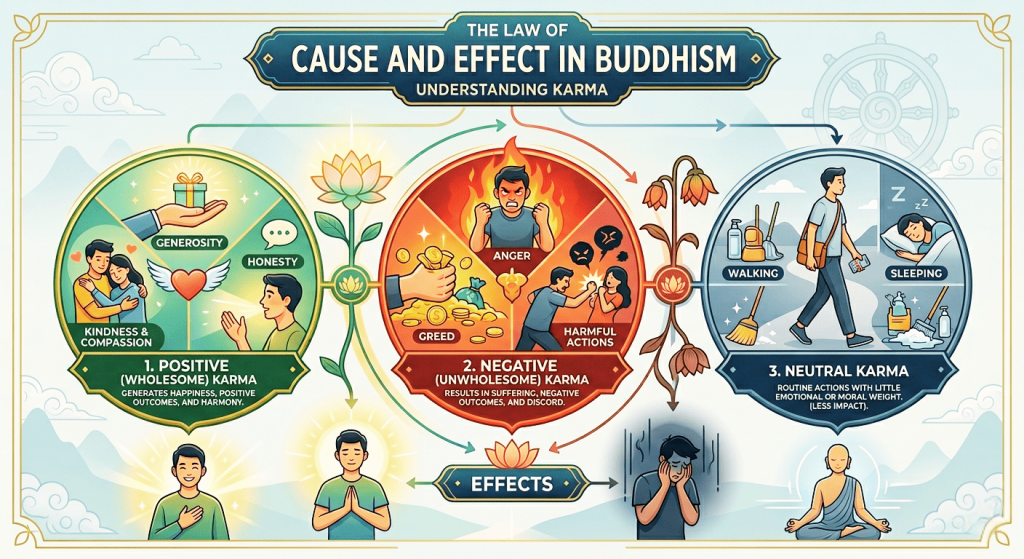
1. Positive (Wholesome) Karma
Generated through kindness, compassion, honesty, and generosity.
Example: Helping others → Builds trust and positive relationships.
2. Negative (Unwholesome) Karma
Created through anger, greed, or harmful actions.
Example: Acting out of anger → Leads to conflict and stress.
3. Neutral Karma
Routine actions with little emotional or moral weight.
How Karma Shapes Your Reality
Karma operates on three levels:
- Mental (thoughts)
- Verbal (speech)
- Physical (actions)
Even a small thought can eventually influence your behaviour and outcomes.
Short-term vs long-term effects:
- Some results appear immediately.
- Others unfold over time—even years.
This explains why life can feel unpredictable. Not all causes produce instant effects.
How the Law of Cause and Effect Works in Everyday Life
This principle isn’t abstract—it’s happening constantly in your daily life.
Real-Life Examples:
- Practicing gratitude → Improves mental well-being
- Consistent effort → Career growth
- Negative thinking → Stress and dissatisfaction
Think of it like planting seeds:
- You plant anger → You grow conflict
- You plant kindness → You grow connection
Over time, these small “seeds” become your habits, and your habits shape your life.
The Connection Between Cause and Effect and Spiritual Awakening
Spiritual awakening isn’t a sudden mystical event. It’s a gradual shift in awareness.
Breaking the Cycle of Suffering (Samsara)
In Buddhism, suffering often comes from unconscious patterns—reacting with anger, attachment, or ignorance.
When you understand cause and effect:
- You stop repeating harmful behaviors
- You begin to respond consciously
Developing Mindfulness and Wisdom
Awakening requires awareness.
By observing your thoughts and actions:
- You see how they create outcomes
- You gain control over your reactions
This is where mindfulness becomes essential.
Letting Go of Negative Patterns
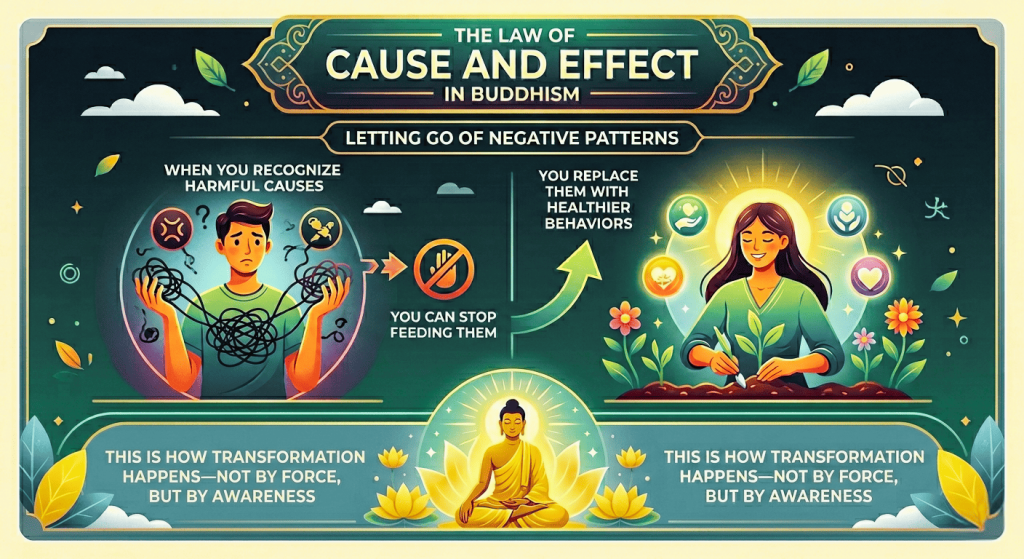
When you recognise harmful causes:
- You can stop feeding them
- You replace them with healthier behaviors
This is how transformation happens—not by force, but by awareness.
Why Understanding This Law Accelerates Your Spiritual Growth
Once you deeply understand this principle, your entire mindset shifts.
1. You Take Responsibility
You stop blaming external circumstances and start focusing on your actions.
2. You Make Better Decisions
Awareness of consequences leads to wiser choices.
3. You Cultivate Compassion
You understand that others are also influenced by their own causes and conditions.
4. You Find Inner Peace
Instead of resisting reality, you align with it.
Practical Ways to Apply the Law of Cause and Effect in Your Life
Knowledge alone isn’t enough—you need application.
Practice Mindfulness Daily
Pay attention to your thoughts, words, and actions.
Be Intentional With Your Actions
Before acting, ask:
- “What result will this create?”
Reflect on Outcomes
At the end of the day, review the following:
- What worked?
- What didn’t?
Cultivate Positive Habits
Small actions repeated daily create powerful long-term effects.
Common Misconceptions About Karma and Cause and Effect
Let’s clear up some confusion.
Myth 1: Karma Is Instant
Reality: Some effects take time to manifest.
Myth 2: Karma Is Fate
Reality: You always have the power to change your actions.
Myth 3: Karma Is Punishment
Reality: It’s a natural law, not a judgement system.
Myth 4: You Can’t Escape Karma
Reality: Awareness allows you to transform future outcomes.
Final Thoughts: Living in Alignment With Cause and Effect
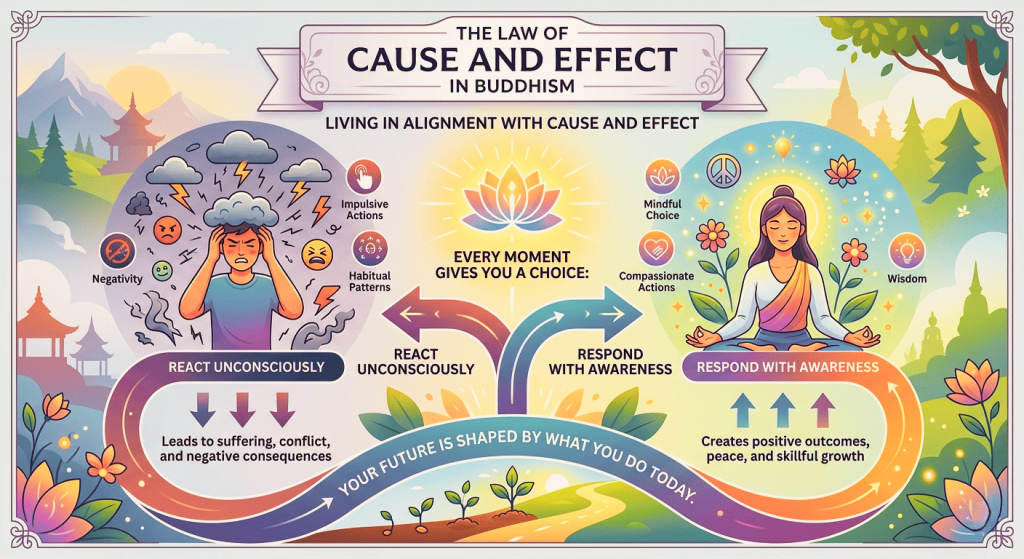
Understanding what the law of cause and effect in Buddhism is and how it supports spiritual awakening is not just philosophical—it’s practical.
Every moment gives you a choice:
- React unconsciously
- Or respond with awareness
Your future is shaped by what you do today.
Spiritual awakening isn’t about becoming perfect. It’s about becoming aware, intentional, and aligned with truth.
Conclusion & Call-to-Action
The law of cause and effect teaches a simple but powerful truth:
Your actions matter.
By becoming mindful of your thoughts, words, and behaviours, you can:
- Break negative cycles
- Create positive change
- Move closer to spiritual awakening
Start today.
Observe one habit. Change one action. Notice the result.
If you found this helpful, explore more spiritual awakening guides or share your thoughts—your journey might inspire someone else.
FAQs
What is the law of cause and effect in Buddhism?
How does the law of cause and effect support spiritual awakening?
Is karma the same as fate?
Can bad karma be changed?
Does karma work instantly?
What are examples of cause and effect in daily life?
* Being kind → building strong relationships
* Working hard → achieving goals
* Negative thinking → increased stress