

The Three Poisons of Buddhism and How It Supports Spiritual Awakening – 2026
Introduction
Many people begin their spiritual journey when they realize that external success, material wealth, or social status alone cannot provide lasting happiness. This search for deeper meaning often leads to ancient wisdom traditions, and one of the most insightful teachings comes from Buddhism: the Three Poisons.
In Buddhist philosophy, the Three Poisons—greed, hatred, and delusion—are considered the root causes of human suffering. These mental states cloud our perception, disturb our emotional balance, and keep us trapped in cycles of dissatisfaction.
Understanding The Three Poisons of Buddhism and how it supports spiritual awakening can be a powerful step toward personal transformation. By learning to recognize and transform these negative mental patterns, individuals can cultivate clarity, compassion, and wisdom—key elements of genuine spiritual growth.
This article explores what the Three Poisons are, how they influence everyday life, and practical ways to overcome them in order to move toward true spiritual awakening.
What Are the Three Poisons of Buddhism and How They Support Spiritual Awakening?
The Three Poisons, also known as the Three Unwholesome Roots, are central to Buddhist teachings about the nature of suffering. These three mental states are believed to be the primary forces that drive negative actions, unhealthy habits, and emotional turmoil.
The Three Poisons are:
- Greed (Attachment or Desire)
- Hatred (Aversion or Anger)
- Delusion (Ignorance or Misunderstanding)
In traditional Buddhist symbolism, these poisons are represented by three animals found in the center of the Wheel of Life:
- A rooster representing greed
- A snake representing hatred
- A pig representing delusion
These animals chase each other in a circle, symbolizing how these mental states continuously feed one another and keep individuals trapped in a cycle of suffering.
However, the purpose of understanding these poisons is not to create guilt or self-criticism. Instead, awareness of these patterns provides a path to liberation. When individuals learn to identify and transform these mental habits, they begin moving toward spiritual awakening and greater inner peace.
The First Poison — Greed (Attachment) and Its Impact on Spiritual Awakening
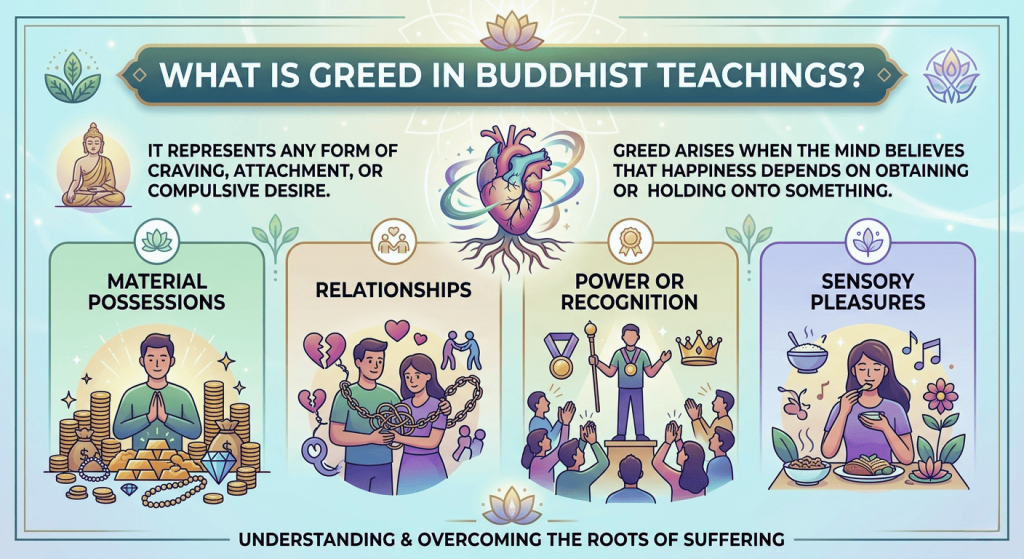
What Is Greed in Buddhist Teachings?
In Buddhism, greed does not simply refer to money or material wealth. It represents any form of craving, attachment, or compulsive desire.
Greed arises when the mind believes that happiness depends on obtaining or holding onto something. This can include:
- Material possessions
- Relationships
- Power or recognition
- Sensory pleasures
The problem is that these desires rarely lead to lasting satisfaction. Once one desire is fulfilled, another quickly appears. This constant craving creates restlessness and dissatisfaction.
Examples of Greed in Modern Life
In today’s fast-paced world, greed often manifests in subtle ways, such as:
- Constantly upgrading gadgets or lifestyle
- Feeling dissatisfied despite success
- Obsessively pursuing status or recognition
- Seeking validation through social media
These behaviors may seem normal, but they often reinforce a mindset that happiness always lies somewhere in the future.
Transforming Greed into Generosity
Buddhist teachings encourage replacing greed with generosity and contentment.
Some helpful practices include:
- Practicing gratitude for what you already have
- Sharing resources and time with others
- Reducing unnecessary consumption
- Appreciating simple experiences
When people loosen their attachment to external outcomes, they begin experiencing a deeper sense of freedom. This shift from craving to contentment plays a major role in supporting spiritual awakening.
The Second Poison — Hatred (Aversion) and Its Role in Blocking Spiritual Awakening
Understanding Hatred in Buddhist Philosophy
The second poison, hatred, refers to anger, resentment, hostility, and emotional rejection of unpleasant experiences.
Whenever the mind encounters something uncomfortable—criticism, disappointment, conflict—it may react with anger or resistance. This reaction creates emotional suffering not only for others but also for the person experiencing it.
Hatred acts like a mental fire, consuming peace and clarity.
Signs of Hatred in Daily Life
Hatred can appear in many everyday situations, including:
- Holding grudges against others
- Reacting defensively to criticism
- Harboring resentment toward coworkers or family members
- Becoming easily irritated by minor inconveniences
Even small moments of irritation can accumulate, creating long-term stress and emotional imbalance.
Transforming Hatred into Compassion
Buddhist teachings offer a powerful antidote to hatred: compassion.
Practices that cultivate compassion include:
- Loving-kindness meditation (Metta meditation)
- Practicing forgiveness
- Viewing others with empathy rather than judgment
- Responding to conflict with patience
When individuals develop compassion, anger begins to dissolve naturally. Compassion allows people to see that everyone struggles with suffering in their own way.
By transforming hatred into compassion, the mind becomes calmer and more open, creating the ideal environment for spiritual awakening.
The Third Poison — Delusion (Ignorance) and Why It Prevents Spiritual Awakening
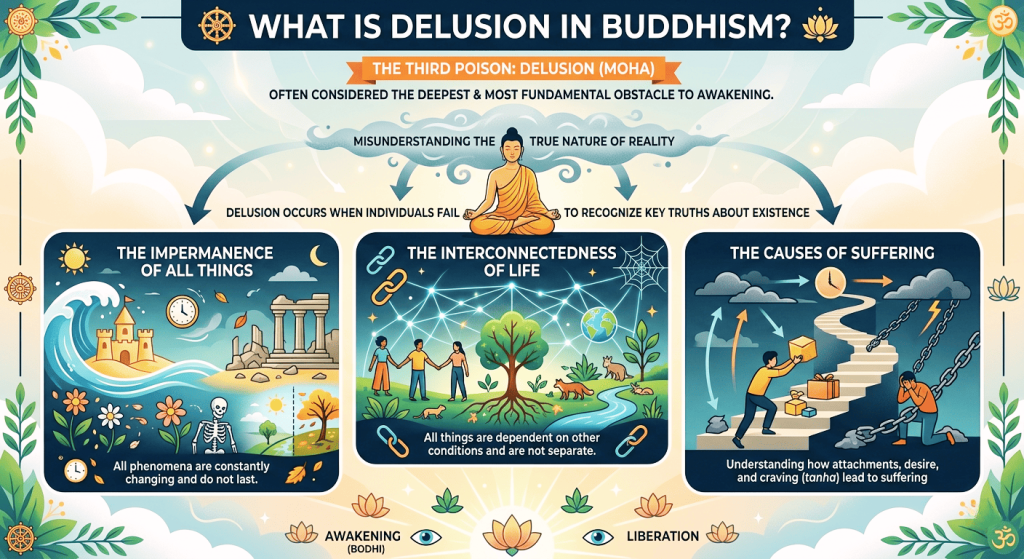
What Is Delusion in Buddhism?
The third poison, delusion, is often considered the deepest and most fundamental obstacle to awakening.
Delusion refers to misunderstanding the true nature of reality. It occurs when individuals fail to recognize key truths about existence, such as:
- The impermanence of all things
- The interconnectedness of life
- The causes of suffering
When people are unaware of these realities, they become attached to illusions about identity, control, and permanence.
How Delusion Appears in Modern Society
Delusion is surprisingly common in everyday life. Examples include:
- Believing happiness depends solely on external success
- Identifying completely with one’s ego or social identity
- Ignoring deeper emotional patterns or unconscious habits
- Living without self-reflection or awareness
Modern culture often reinforces these illusions by emphasizing achievement, competition, and material gain as the ultimate goals of life.
Transforming Delusion into Wisdom
The antidote to delusion is wisdom.
Wisdom develops through practices such as:
- Meditation
- Mindfulness
- Studying spiritual teachings
- Reflecting on personal experiences
Through these practices, individuals begin seeing reality more clearly. They recognize that emotions, thoughts, and circumstances are constantly changing.
This clarity weakens the illusions that create suffering and opens the door to genuine spiritual awakening.
How the Three Poisons Keep People Trapped in the Cycle of Suffering
The Three Poisons rarely appear in isolation. Instead, they interact and reinforce each other.
For example:
- Greed can lead to frustration when desires are not fulfilled, creating hatred.
- Hatred can cloud judgment, increasing delusion.
- Delusion can create more cravings and attachments, strengthening greed.
This cycle of reactions keeps individuals trapped in what Buddhism calls samsara, the continuous cycle of dissatisfaction and suffering.
Breaking this cycle requires awareness. Once individuals begin observing these patterns in their own thoughts and behaviors, they gain the ability to interrupt them.
This awareness is a major step toward spiritual freedom.
Practical Ways to Overcome the Three Poisons for Spiritual Awakening
Mindfulness Meditation
Mindfulness meditation helps individuals observe their thoughts and emotions without automatically reacting to them.
By watching mental patterns arise and pass, people become less controlled by greed, anger, or confusion.
Even a few minutes of daily meditation can significantly improve mental clarity.
Practicing Compassion and Kindness
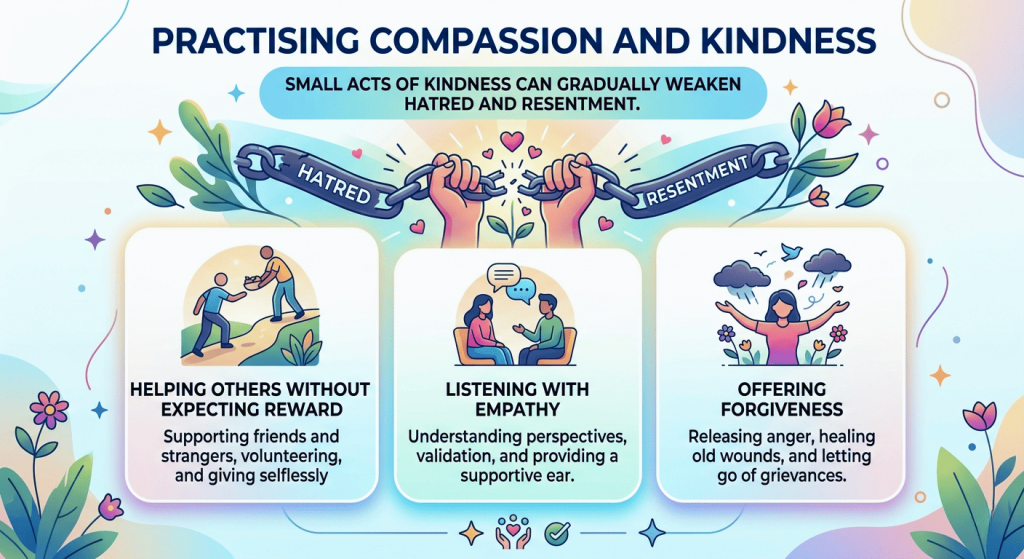
Small acts of kindness can gradually weaken hatred and resentment.
Examples include:
- Helping others without expecting reward
- Listening with empathy
- Offering forgiveness
These actions create positive emotional habits that replace hostility.
Developing Wisdom Through Reflection
Regular self-reflection allows individuals to understand their motivations and reactions more clearly.
Questions such as the following can be helpful:
- Why did I react strongly in that situation?
- Was my reaction based on fear or attachment?
- What can I learn from this experience?
Reflection turns everyday challenges into opportunities for growth.
Following the Noble Eightfold Path
In Buddhism, the Noble Eightfold Path provides a practical framework for transforming the Three Poisons. It includes principles such as:
- Right understanding
- Right intention
- Right speech
- Right action
- Right mindfulness
Following these guidelines gradually purifies the mind and strengthens spiritual awareness.
Why Understanding the Three Poisons of Buddhism Is Essential for Spiritual Awakening
The teaching of the Three Poisons remains relevant even in modern society. It explains why people often feel restless, frustrated, or disconnected despite technological progress and material comfort.
By understanding these inner obstacles, individuals gain the ability to:
- Recognize harmful mental patterns
- Cultivate emotional balance
- Improve relationships with others
- Experience deeper meaning in life
Instead of blaming external circumstances for suffering, people begin focusing on transforming their own minds.
This shift in perspective is one of the most powerful steps toward lasting spiritual awakening.
Conclusion
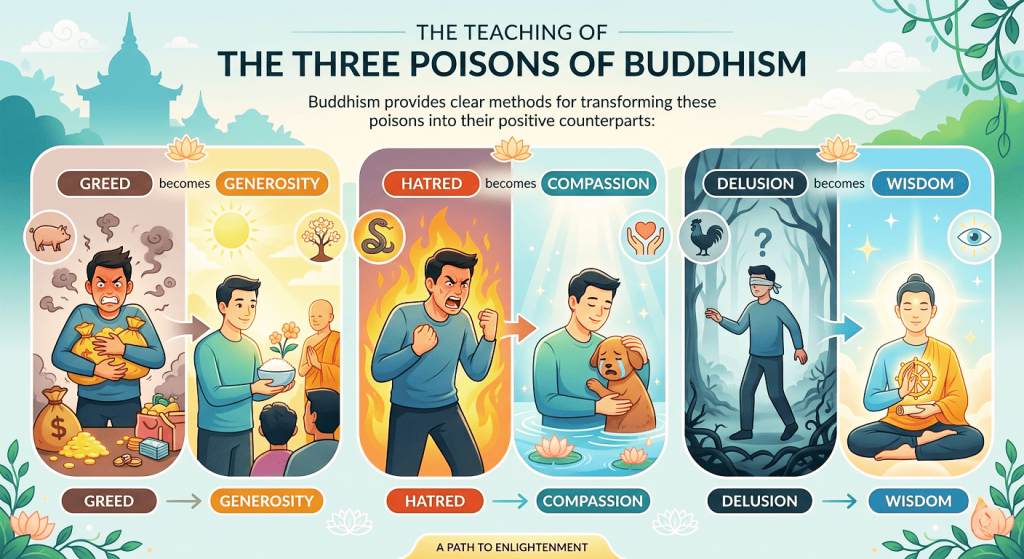
The teaching of The Three Poisons of Buddhism and how it supports spiritual awakening offers profound insight into the human mind.
Greed, hatred, and delusion are not abstract philosophical ideas. They are everyday mental habits that influence how people think, react, and make decisions.
Fortunately, Buddhism also provides clear methods for transforming these poisons into their positive counterparts:
- Greed becomes generosity
- Hatred becomes compassion
- Delusion becomes wisdom
As individuals cultivate these qualities through mindfulness, reflection, and ethical living, they gradually move closer to inner peace and genuine spiritual awakening.