What Is the Story of Khema, and How Does It Support Spiritual Awakening? A Step-by-Step Guide to Inner Transformation in 2026
Introduction
Spiritual awakening is often described as a deep shift in how we see ourselves and the world. It’s not just about gaining knowledge—it’s about realising truth. One of the most powerful stories that illustrates this transformation is the story of Khema.
So, what is the story of Khema, and how does it support spiritual awakening?
Khema’s journey—from pride in physical beauty to profound enlightenment—offers timeless lessons about impermanence, ego, and inner peace. In this guide, you’ll not only understand her story but also learn how to apply its teachings to your own life in a practical, step-by-step way.
What Is the Story of Khema, and How Does It Support Spiritual Awakening? (Overview)
Khema was a queen celebrated for her extraordinary beauty. Deeply attached to her appearance, she avoided spiritual teachings—especially those that challenged her self-image.
However, after encountering the Gautama Buddha, everything changed.
Through a powerful teaching on impermanence, Khema realised that beauty is temporary and that attachment leads to suffering. This insight triggered her spiritual awakening, eventually leading her to enlightenment.
Her story supports spiritual awakening by showing the following:
- The illusion of external identity
- The importance of seeing reality clearly
- The freedom that comes from letting go
Who Was Khema? Understanding Her Background
Khema as a Queen Known for Beauty
Khema was one of the queens of King Bimbisara in ancient India. She was widely admired for her physical beauty and took immense pride in it. Her identity was strongly tied to how others perceived her appearance.
This attachment is something many people today can relate to—especially in a world driven by social media, filters, and external validation.
Encounter with the Buddha
Khema initially avoided meeting the Buddha because she knew he often spoke about the impermanence of beauty—something she didn’t want to confront.
Eventually, she visited a monastery where the Buddha was teaching. What happened next would completely transform her life.
The Story of Khema Explained Step-by-Step
Step 1 – Attachment to Physical Beauty

Khema’s sense of self-worth was built on her appearance. She believed her beauty defined her value.
This is a common human tendency—attaching identity to the following:
- Looks
- Status
- Wealth
- Social approval
However, these are all temporary.
Step 2 – The Buddha’s Vision Teaching
When Khema met the Buddha, he used a powerful method to teach her.
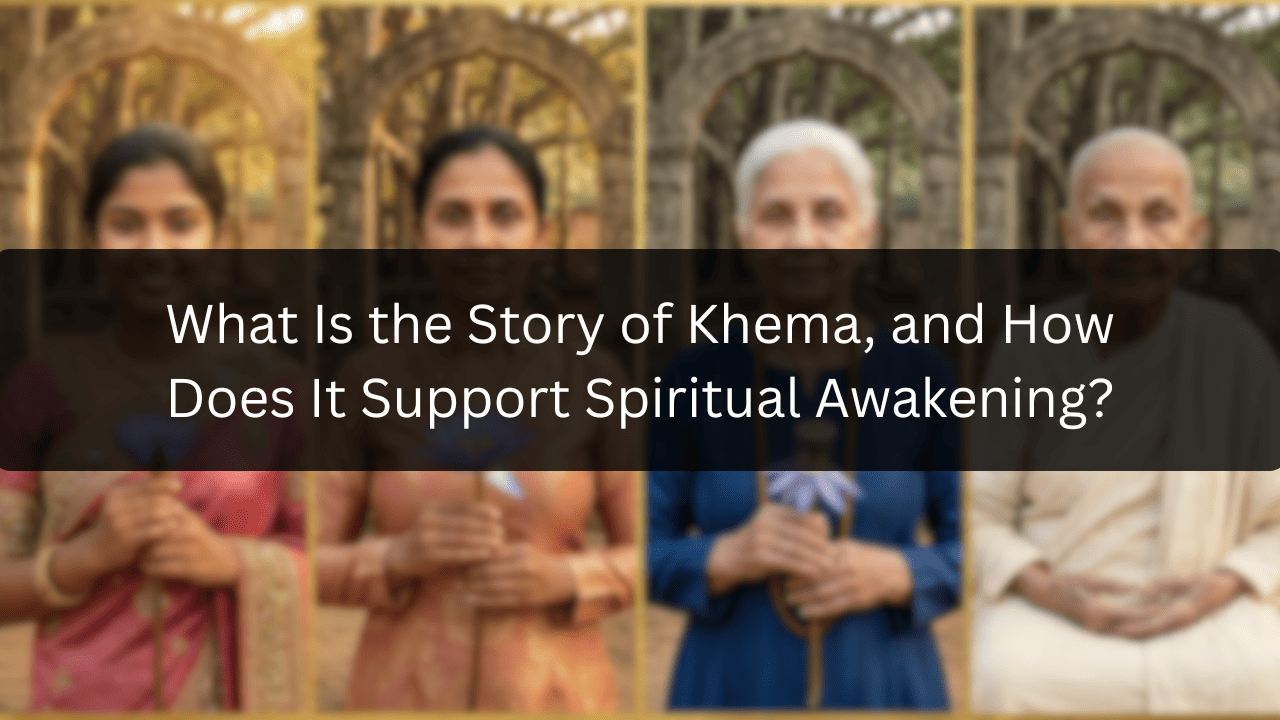
He created a vision of a stunningly beautiful woman standing nearby. As Khema watched, the woman slowly aged—her youth fading, her body weakening, until she eventually died.
This visual demonstration struck Khema deeply.
She realised:
- Beauty fades
- Youth is temporary
- Everything changes
This is the core Buddhist concept of impermanence (anicca).
Step 3 – Realisation and Awakening
At that moment, Khema’s attachment shattered.
She understood that clinging to temporary things leads to suffering. This insight awakened a deeper awareness within her.
She eventually became one of the most enlightened female disciples of the Buddha, known for her wisdom.
What Spiritual Lessons Can You Learn from Khema’s Story?
Lesson 1 – Impermanence (Anicca)
Nothing in life stays the same.
Your body, emotions, relationships, and achievements are all in constant change. When you accept this truth, you stop resisting life.
Modern application:
- Don’t base your happiness on temporary conditions
- Accept aging and life transitions gracefully
Lesson 2 – Letting Go of Ego
Khema’s ego was tied to her beauty. Once she let go of that identity, she experienced freedom.
Your ego may be tied to:
- Career success
- Social status
- Personal image
Letting go doesn’t mean losing yourself—it means discovering your true self beyond labels.
Lesson 3 – True Beauty Is Inner Peace

External beauty fades, but inner peace grows stronger over time.
Khema’s transformation shows that real beauty comes from the following:
- Wisdom
- Calmness
- Awareness
How Does the Story of Khema Support Spiritual Awakening?
Breaking Illusions of the Mind
Spiritual awakening begins when you see through illusions.
Khema believed beauty was permanent. Once that illusion broke, truth became visible.
Developing Mindfulness and Awareness
Her awakening wasn’t just intellectual—it was deeply experiential.
This is where mindfulness comes in:
- Observing thoughts without attachment
- Becoming aware of reality as it is
Applying Detachment in Daily Life
Detachment doesn’t mean indifference. It means:
- Enjoying life without clinging
- Accepting change without fear
Practical Steps to Apply Khema’s Teachings Today (Tutorial Section)
Here’s how you can actively use Khema’s story for your own spiritual growth:
Step 1 – Observe Your Attachments
Ask yourself:
- What defines my self-worth?
- What am I afraid of losing?
Write your answers in a journal.
Step 2 – Practise Mindfulness Meditation
Start simple:
- Sit quietly for 5–10 minutes
- Focus on your breath
- Observe thoughts without reacting
This builds awareness—the foundation of awakening.
Step 3 – Accept Impermanence
Practise letting go:
- Notice small changes daily
- Reflect on how everything evolves
This reduces anxiety and fear.
Step 4 – Redefine Self-Worth

Shift your focus:
- From appearance → to character
- From validation → to self-awareness
This creates lasting confidence.
Common Misinterpretations of Khema’s Story
It’s important to avoid misunderstandings:
- ❌ “Beauty is bad” → No, attachment to it is the issue
- ❌ “You must reject the world” → No, you must understand it clearly
- ❌ “Detachment means no emotions” → It means balanced emotions
Khema didn’t reject beauty—she saw its true nature.
Why Khema’s Story Still Matters Today
Khema’s story is more relevant than ever.
In today’s world:
- Social media amplifies appearance-based validation
- People struggle with self-worth and comparison
- Anxiety about aging and success is common
Her story offers a solution:
- Shift from external to internal validation
- Build awareness instead of chasing perfection
Conclusion & Call-to-Action
So, what is the story of Khema, and how does it support spiritual awakening?
It’s a powerful reminder that:
- Everything changes
- Attachment creates suffering
- Awareness leads to freedom
Khema’s journey shows that awakening is not reserved for monks or sages—it’s available to anyone willing to see the truth.
Now it’s your turn:
- Take 5 minutes today to reflect on what you’re attached to
- Start a simple mindfulness practice
- Begin your journey toward inner peace