What is the story of Prince Vessantara from the Vessantara Jataka, and how does it support spiritual awakening in 2026?
Introduction
Stories have always played a powerful role in spiritual traditions. In Buddhism, many teachings are conveyed through ancient narratives known as Jataka tales, which describe the previous lives of the Buddha before his final birth. Among these stories, the Story of Prince Vessantara from the Vessantara Jataka is one of the most profound and inspiring.
This story highlights the practice of ultimate generosity, compassion, and detachment, qualities that are considered essential for spiritual awakening. The narrative tells the story of a prince who gives away everything he owns—including his wealth, possessions, and even his family—to cultivate the perfection of generosity.
While the story may seem extreme at first, its deeper message speaks directly to modern spiritual seekers. It teaches that freedom from attachment and the willingness to give selflessly can lead to inner peace and spiritual transformation.
In this article, we will explore what the Story of Prince Vessantara from the Vessantara Jataka is, the deeper meaning behind it, and how its lessons support spiritual awakening even today.
What is the story of Prince Vessantara from the Vessantara Jataka?
Origins of the Vessantara Jataka
The Vessantara Jataka is one of the most celebrated stories in Buddhist literature. It is believed to describe one of the final past lives of the Bodhisattva before he was born as the historical Buddha, Gautama Buddha.
In these stories, the Bodhisattva develops spiritual qualities known as paramitas, or perfections. One of the most important of these is generosity, called ‘Dana’ in Buddhist teachings.
The Vessantara story illustrates the Bodhisattva’s commitment to practising generosity to the highest possible degree. Through his actions, Prince Vessantara demonstrates that true spiritual progress requires letting go of attachment to material possessions and even emotional comforts.
This is why the story is often viewed as a powerful guide for those seeking spiritual awakening.
Summary of the Story of Prince Vessantara
Prince Vessantara was the son of a king and lived in a prosperous kingdom. From an early age, he was known for his incredible generosity. He believed that helping others and giving freely were the highest forms of virtue.
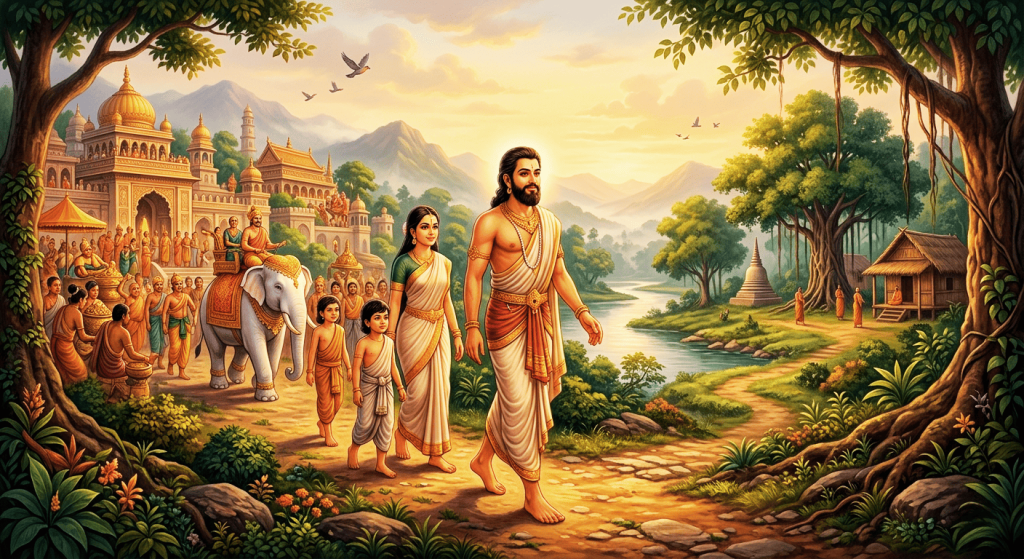
One day, a neighbouring kingdom suffered from a severe drought. Hearing about their suffering, Prince Vessantara decided to give them the kingdom’s sacred white elephant, which was believed to bring rain and prosperity.
However, the people of his kingdom became angry when they learned that he had given away such a valuable treasure. They believed he had endangered their own well-being.
As a result, the prince was exiled from the kingdom.
Prince Vessantara accepted this punishment without anger. Accompanied by his wife and children, he left the palace and travelled into the forest to live a simple life.
During their journey, his generosity continued. He gave away his chariot, his horses, and many other possessions to people who asked for help.
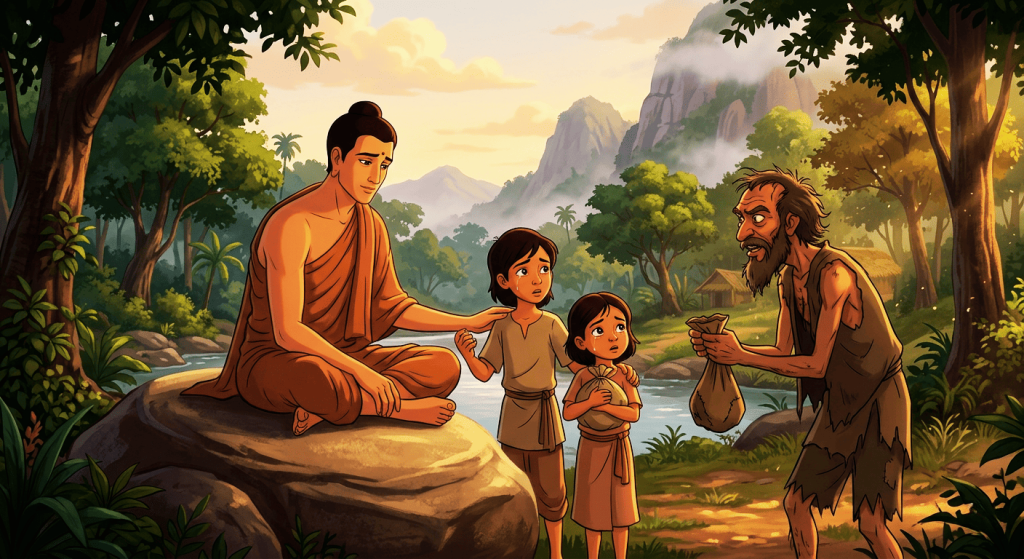
Later, while living in the forest, a greedy man approached him and asked for his two children to serve as workers. Despite the immense emotional pain, Prince Vessantara agreed and gave his children away.
Soon after, another man asked for his wife, and once again the prince demonstrated ultimate generosity and non-attachment.
Eventually, the truth about his extraordinary compassion became known. The gods themselves intervened, restoring his family and allowing Prince Vessantara to return home. He was welcomed back as a noble and enlightened ruler.
The story concludes with the recognition that his acts of generosity helped him progress toward becoming the Buddha.
The Spiritual Meaning Behind the Story of Prince Vessantara
Understanding the Practice of Generosity (Dana)
One of the central teachings illustrated in the Vessantara story is Dana, the practice of generosity.
In Buddhism, generosity is not simply about giving material gifts. It represents a deeper spiritual discipline that helps individuals overcome selfishness and attachment.
Generosity can take many forms, including:
- Sharing resources with those in need
- Offering kindness and compassion
- Giving time and knowledge to help others
- Supporting charitable causes
The act of giving reduces the grip of ego and cultivates a mindset of compassion. Over time, this practice leads to a greater sense of connection with others.
Prince Vessantara embodies the highest form of generosity, showing that true giving comes from a heart free of selfish motives.
Why Detachment is Essential for Spiritual Awakening
Another key message in the story is the importance of detachment.
According to Buddhist teachings, attachment to possessions, status, and relationships can create suffering. When we cling too tightly to things, we experience fear, anxiety, and disappointment when they change or disappear.
Prince Vessantara’s actions demonstrate the ability to let go of attachment. His generosity is not motivated by recklessness but by a deep understanding that true happiness does not come from possessions.
By letting go, he develops inner freedom.
For spiritual seekers, this lesson is crucial. Awakening is not about gaining more things—it is about releasing the attachments that keep the mind trapped in suffering.
Key Lessons from the Story of Prince Vessantara for Spiritual Awakening
Lesson 1 – Selfless Giving Creates Inner Freedom
One of the most powerful lessons from the Vessantara story is that selfless giving leads to inner liberation.
When people give without expecting rewards, recognition, or gratitude, they weaken the ego’s desire for control and approval.
This creates a sense of lightness and freedom.
Even small acts of generosity—such as helping a stranger or supporting someone in need—can transform the way we see the world.
Lesson 2 – Compassion Strengthens Spiritual Growth
Prince Vessantara’s actions were guided by deep compassion for others.
Compassion allows individuals to understand the suffering of others and respond with kindness rather than judgement.
In spiritual practice, compassion helps expand awareness beyond personal concerns.
When people cultivate compassion, they become more mindful, patient, and understanding. These qualities are essential for spiritual awakening.
Lesson 3 – Detachment Leads to True Peace
Modern society often encourages people to accumulate wealth, status, and possessions. However, the Vessantara story reminds us that lasting peace does not come from accumulation.
Detachment does not mean rejecting the world or abandoning responsibilities. Instead, it means enjoying life without becoming dependent on material things for happiness.
When people practise detachment, they develop emotional resilience and inner calm.
Lesson 4 – Faith and Patience in Difficult Times
The exile of Prince Vessantara demonstrates the importance of patience and faith during difficult circumstances.
Despite losing his kingdom and facing hardship, he never abandoned his commitment to generosity and virtue.
For spiritual seekers, challenges and setbacks are inevitable. However, maintaining compassion and integrity during difficult times strengthens spiritual development.
How the Story of Prince Vessantara Supports Spiritual Awakening Today
Applying Generosity in Modern Life
Although the Vessantara story is ancient, its lessons are surprisingly relevant today.
People can practise generosity in simple ways such as:
- Donating to charities or community projects
- Helping neighbors or friends in need
- Volunteering time for meaningful causes
- Sharing knowledge or skills with others
These actions create positive change in both the giver and the receiver.
Developing a Spiritual Mindset Through Giving
Regular acts of generosity can transform the way people think and feel.
Generosity helps:
- Reduce selfish thinking
- Increase gratitude
- Strengthen empathy
- Build stronger communities
When individuals give regularly, they begin to see the interconnected nature of life.
This awareness is an important step toward spiritual awakening.
Why Ancient Buddhist Stories Still Matter Today
Ancient spiritual stories remain valuable because they communicate universal truths.
The Story of Prince Vessantara encourages readers to reflect on questions such as:
- What am I attached to?
- How can I help others more selflessly?
- What does true generosity mean in my life?
By reflecting on these questions, individuals can deepen their spiritual understanding and grow toward inner peace.
Practical Ways to Practice the Teachings of Prince Vessantara

Readers who want to apply the lessons of the Vessantara story can start with simple practices:
1. Perform small acts of kindness every day.
Helping others regularly strengthens compassion.
2. Practise mindful generosity.
Give without expecting recognition or reward.
3. Let go of unnecessary possessions.
Simplifying life can reduce attachment and stress.
4. Offer emotional support to others.
Sometimes listening and understanding are the greatest gifts.
5. Reflect on gratitude.
Appreciating what we already have reduces the urge to cling to material things.
Through these practices, the spirit of Prince Vessantara’s generosity can be integrated into daily life.
Conclusion
The Story of Prince Vessantara from the Vessantara Jataka is far more than an ancient legend. It is a profound spiritual teaching about the transformative power of generosity, compassion, and detachment.
Prince Vessantara’s life illustrates that true spiritual awakening is not achieved through wealth or status, but through a heart that is willing to give freely and love without attachment.
For modern readers, the story serves as a reminder that even small acts of generosity can create powerful inner change. By practising compassion, letting go of unnecessary attachments, and helping others selflessly, anyone can move closer to spiritual awakening.