What Is the Zen Story of “Is That So?” (Master Hakuin Ekaku), and How Does It Support Spiritual Awakening in 2026?
Introduction
In a world driven by reactions—likes, comments, opinions, and constant emotional triggers—inner peace can feel almost impossible to maintain. Yet, centuries ago, Zen masters were already teaching a radically simple approach to life: observe, accept, and remain undisturbed.
One of the most powerful examples of this wisdom comes from Hakuin Ekaku, a renowned teacher of Zen Buddhism. His famous response, “Is that so?”, in a moment of public accusation, has become a timeless lesson in emotional mastery and spiritual awakening.
But what does this story really mean? And how can such a simple phrase support deep personal transformation?
This guide breaks it down step by step so you can not only understand it but actually live it.
What Is the Zen Story of “Is That So?” (Master Hakuin Ekaku)?
The Story Explained in Simple Terms
The story goes like this:
A young girl in a village became pregnant. When questioned by her parents about the father, she falsely accused Hakuin Ekaku, a respected Zen master. The parents, furious, confronted him.
His response?
“Is that so?”
Without defending himself, arguing, or reacting, he accepted the situation. After the child was born, it was brought to him, and he cared for it without complaint.
Months later, the truth came out—the real father was someone else. The parents returned, apologetic and ashamed, asking for the child back.
Again, Hakuin simply said:
“Is that so?”
No anger. No pride. No resentment.
Just presence.
Key Context Behind the Story
Hakuin Ekaku was a central figure in revitalising Japanese Zen Buddhism, particularly the Rinzai school. His teachings emphasised direct experience, discipline, and awakening through everyday life.
This story isn’t about passivity—it’s about mastery over the ego and reactions.
What Does “Is That So?” Really Mean in Zen Philosophy?
The Power of Non-Reactivity
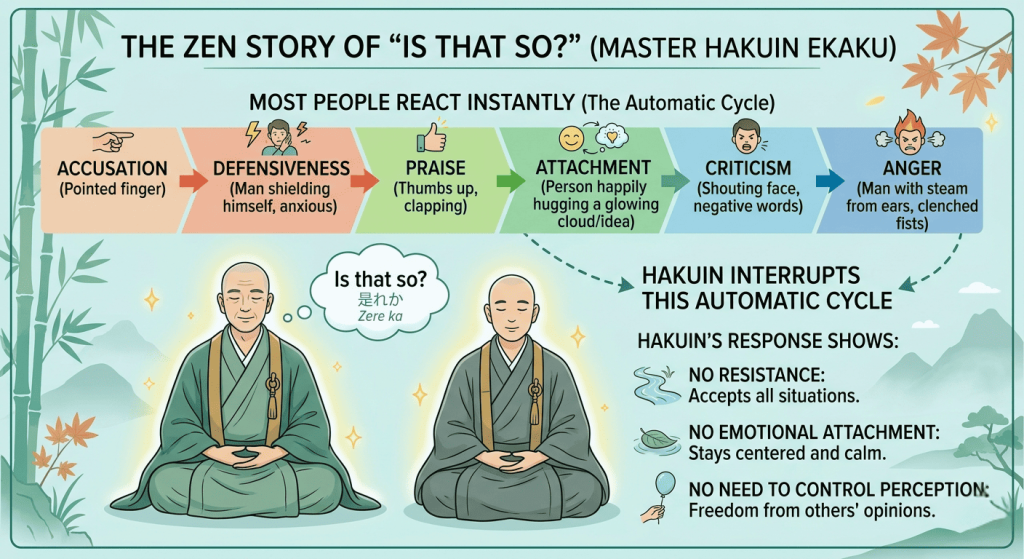
At first glance, “Is that so?” may sound indifferent. But in Zen, it reflects pure awareness without emotional disturbance.
Most people react instantly:
- Accusation → Defensiveness
- Praise → Attachment
- Criticism → Anger
Hakuin interrupts this automatic cycle.
His response shows:
- No resistance
- No emotional attachment
- No need to control perception
This is the essence of mindfulness.
Letting Go of Ego and Judgment
The ego constantly seeks the following:
- Validation
- Control
- Approval
When accused falsely, the ego screams: “Defend yourself!”
But Hakuin doesn’t operate from ego. He operates from awareness.
By saying “Is that so?”, he:
- Releases the need to be right
- Lets go of identity
- Accepts reality as it appears
This is a key step toward spiritual awakening.
How the Story of “Is That So?” Supports Spiritual Awakening
Acceptance Without Resistance
Spiritual awakening often begins with one realisation:
Suffering comes from resisting what is.
Hakuin doesn’t resist the accusation. He accepts it—not because it’s true, but because fighting reality creates inner conflict.
Acceptance doesn’t mean agreement.
It means inner peace regardless of circumstances.
Living in the Present Moment
Hakuin doesn’t dwell on the following:
- Past reputation
- Future consequences
He remains in the present moment.
This aligns with a core principle of Zen Buddhism:
Awareness of now is the gateway to awakening.
Detachment from External Validation
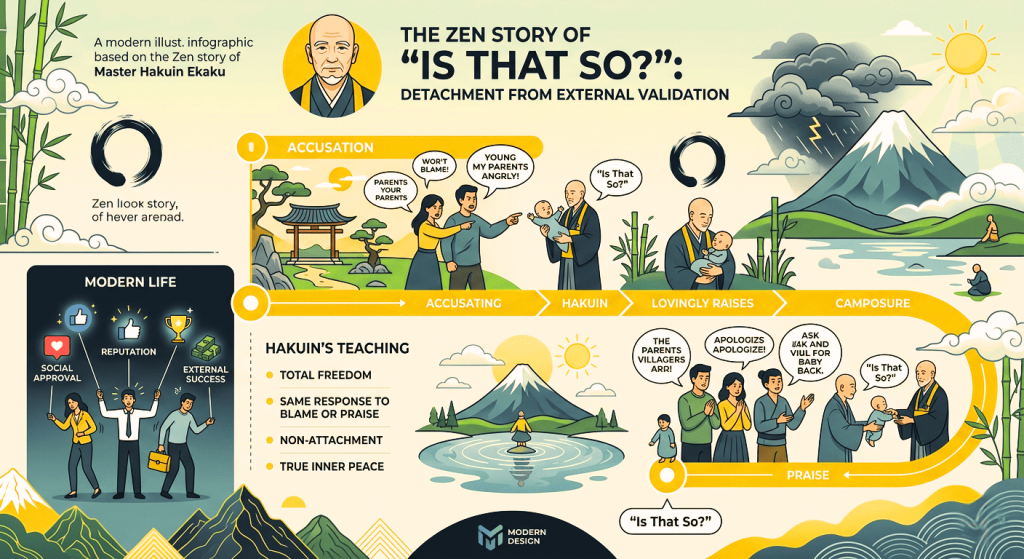
In modern life, identity is often tied to:
- Social approval
- Reputation
- External success
Hakuin demonstrates total freedom from these.
Whether blamed or praised, his response remains the same.
This teaches:
- True peace comes from within
- External opinions don’t define you
Practical Lessons You Can Apply in Daily Life
How to Practise the “Is That So?” Mindset
You don’t need to be a monk to apply this. Start small:
- Pause Before Reacting
When triggered, take a breath. - Observe Your Thoughts
Notice emotions without acting on them. - Mentally Say “Is That So?”
This creates space between stimulus and response.
Real-Life Examples
- At Work:
Someone criticises your performance → Instead of reacting, observe calmly. - In Relationships:
Arguments arise → Respond with awareness, not ego. - Online:
Negative comments → Detach from emotional impact.
Simple Daily Exercises
- Mindful Breathing (5 minutes daily)
- Journaling your reactions
- Silent observation practice
These build emotional resilience over time.
Why This Zen Story Still Matters Today (Especially in the USA)
Modern Stress and Emotional Overload
Today’s environment is filled with:
- Constant notifications
- Social comparison
- Information overload
This creates a reactive mindset.
The “Is That So?” approach is an antidote.
The Need for Inner Peace in a Noisy World
In a culture driven by instant reactions, calm awareness becomes a superpower.
Practising non-reactivity helps:
- Reduce anxiety
- Improve decision-making
- Strengthen emotional intelligence
Common Misinterpretations of the “Is That So?” Story
Is It Passive or Indifferent?
No.
Hakuin still acted—he cared for the child responsibly.
The difference is:
- Action without emotional disturbance
The Difference Between Suppression and Awareness
Suppression = ignoring emotions
Awareness = observing emotions without attachment
Zen teaches awareness, not repression.
Conclusion: The Power of a Simple Phrase
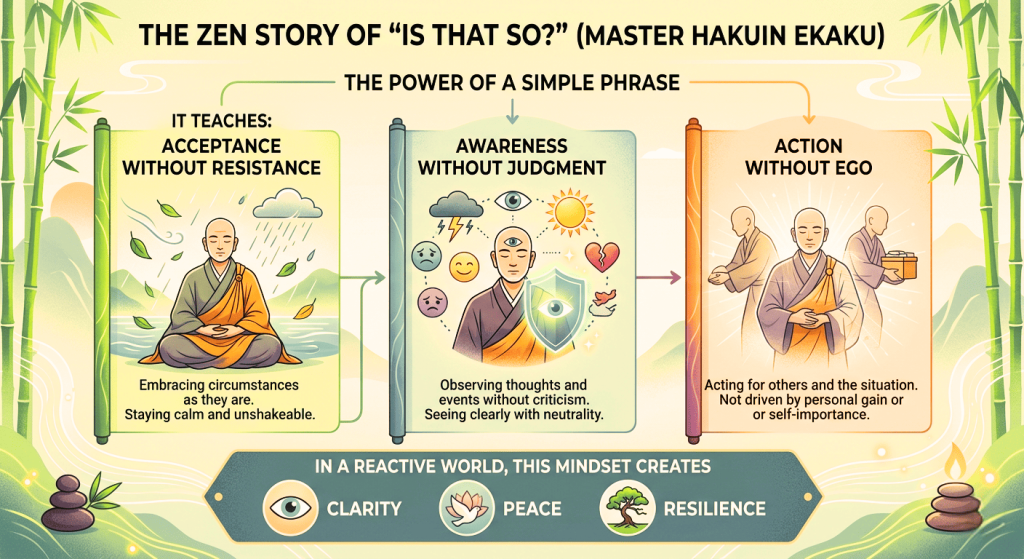
The Zen story of “Is That So?” is more than a story—it’s a blueprint for inner freedom.
It teaches:
- Acceptance without resistance
- Awareness without judgment
- Action without ego
In a reactive world, this mindset creates clarity, peace, and resilience.
Call to Action
Start today:
- The next time you feel triggered, pause and ask:
“Is that so?”
Observe what changes.
If you found this helpful, explore more Zen teachings, practise mindfulness daily, and share this insight with someone who needs calm in their life.