The Middle Way of Buddhism and How It Supports Spiritual Awakening – 2026
Introduction
In a world where people are often pulled toward extremes—overworking, overindulging, or pushing themselves too hard in the pursuit of success or happiness—finding balance can feel difficult. This is where one of Buddhism’s most profound teachings becomes highly relevant: the Middle Way.
The Middle Way of Buddhism and how it supports spiritual awakening is a timeless principle that encourages balance, moderation, and wisdom in every aspect of life. Rather than pursuing pleasure without restraint or practicing harsh self-denial, the Middle Way teaches a balanced approach that nurtures both the body and the mind.
This teaching was discovered by Siddhartha Gautama, the Buddha, during his quest for enlightenment. After experiencing both luxury and extreme asceticism, he realized that neither extreme led to true freedom from suffering. Instead, a balanced path—free from harmful extremes—opened the door to clarity, mindfulness, and spiritual awakening.
Today, the Middle Way remains a practical guide for anyone seeking inner peace, mental clarity, and personal transformation.
What Is the Middle Way of Buddhism?
The Middle Way, known in Buddhist teachings as Majjhima Patipada, is the path of moderation and balance. It is the core philosophy that guides Buddhist practice and ethical living.
Rather than encouraging strict renunciation or unlimited indulgence, the Middle Way promotes a balanced lifestyle that supports physical health, emotional stability, and spiritual growth.
The Origin of the Middle Way
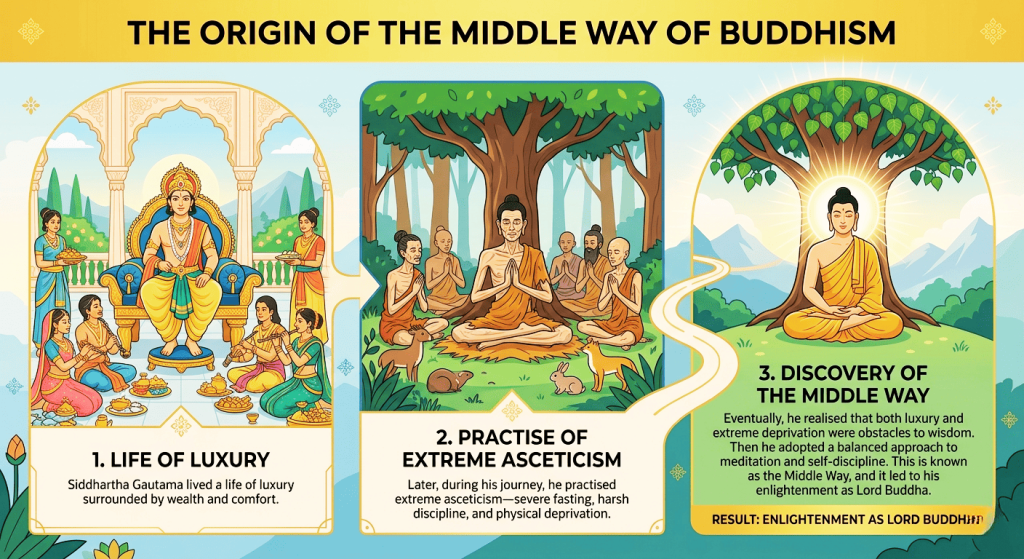
The concept of the Middle Way comes from the Buddha’s personal experience before his enlightenment.
As a young prince, Siddhartha Gautama lived a life of luxury surrounded by wealth and comfort. However, he eventually realized that material pleasure did not bring lasting happiness. Seeking deeper meaning, he left his palace and began a spiritual journey.
During this journey, he practiced extreme asceticism—severe fasting, harsh discipline, and physical deprivation. These practices weakened his body and clouded his mind rather than bringing enlightenment.
Eventually, he realized that both luxury and extreme deprivation were obstacles to wisdom. Sitting beneath the Bodhi tree, he adopted a balanced approach to meditation and self-discipline. This balanced approach became known as the Middle Way, and it led to his enlightenment.
The Meaning of “Middle” in Buddhist Philosophy
In Buddhism, the word “middle” does not simply mean compromise. Instead, it refers to a wise balance between opposing extremes.
The Middle Way teaches individuals to avoid behaviors and beliefs that create suffering, while cultivating habits that support clarity, compassion, and awareness.
This philosophy applies to many areas of life, including:
- Lifestyle and consumption
- Emotional responses
- Spiritual practice
- Work-life balance
- Relationships
Through this balanced perspective, individuals create conditions that support spiritual awakening.
Why the Middle Way Is Essential for Spiritual Awakening
Spiritual awakening requires clarity, stability, and mindfulness. Extremes often disrupt these qualities.
The Middle Way helps individuals develop a balanced mindset that supports spiritual progress.
Avoiding the Trap of Excessive Pleasure
Modern society often encourages people to seek constant pleasure through entertainment, material goods, food, or social media. While enjoyment is not inherently harmful, excessive attachment to pleasure can lead to dissatisfaction.
When people rely on external stimulation for happiness, they often experience temporary satisfaction followed by emptiness or craving for more.
The Middle Way encourages mindful enjoyment without attachment, allowing individuals to appreciate experiences without becoming dependent on them.
Avoiding the Harm of Extreme Self-Denial
On the opposite side of indulgence is extreme self-denial. Some people believe spiritual growth requires harsh discipline, excessive fasting, or rejecting all worldly comforts.
However, the Buddha taught that weakening the body and mind makes spiritual clarity difficult.
The Middle Way recognizes that physical well-being supports spiritual growth. When the body is healthy and the mind is calm, meditation and mindfulness become more effective.
Finding Balance Between Mind, Body, and Spirit
True spiritual awakening occurs when the mind, body, and emotions are in harmony.
The Middle Way encourages individuals to:
- Care for their physical health
- Cultivate emotional awareness
- Develop wisdom and compassion
- Practice mindfulness regularly
This balanced approach creates a stable foundation for spiritual transformation.
How the Middle Way Connects to the Noble Eightfold Path
One of the most important expressions of the Middle Way is the Noble Eightfold Path, a practical guide for living wisely and compassionately.
The Eightfold Path outlines eight practices that support enlightenment.
Right View and Right Intention
Right View involves understanding the nature of suffering, impermanence, and the causes of dissatisfaction in life.
Right Intention focuses on cultivating positive motivations such as kindness, compassion, and renunciation of harmful desires.
Together, these two elements develop wisdom and guide individuals toward balanced thinking.
Right Speech, Action, and Livelihood
These three elements focus on ethical living.
Right Speech encourages honesty, kindness, and respectful communication.
Right Action promotes non-harmful behavior and moral conduct.
Right Livelihood encourages choosing professions that do not harm others.
Practicing these principles reflects the Middle Way in everyday life.
Right Effort, Mindfulness, and Concentration
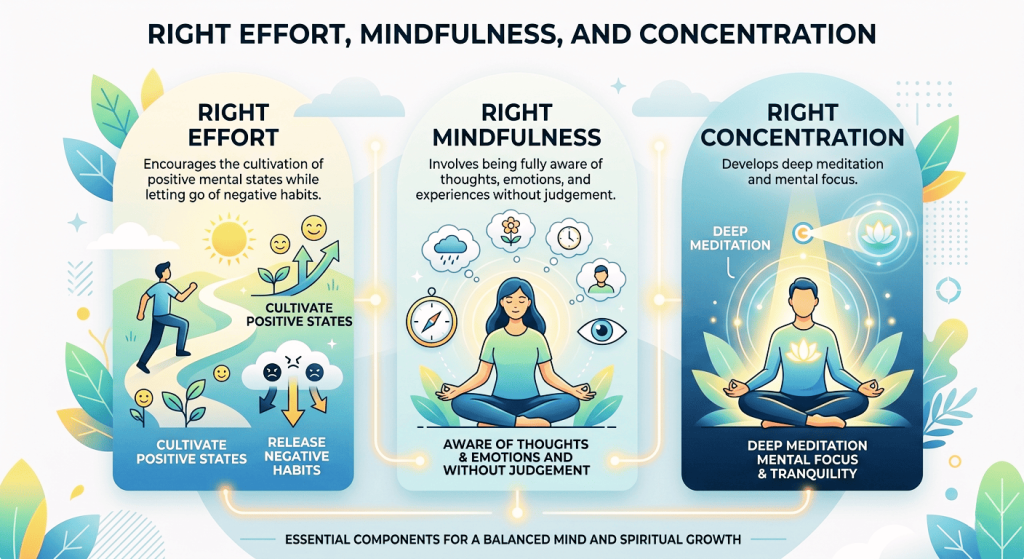
The final three aspects of the Eightfold Path focus on mental discipline.
Right Effort encourages the cultivation of positive mental states while letting go of negative habits.
Right Mindfulness involves being fully aware of thoughts, emotions, and experiences without judgment.
Right Concentration develops deep meditation and mental focus.
Together, these practices strengthen awareness and support spiritual awakening.
Practical Ways to Practice the Middle Way in Daily Life
One of the most powerful aspects of the Middle Way is that it can be applied in everyday situations.
Small adjustments in daily habits can create meaningful spiritual growth.
Practicing Mindful Consumption
The Middle Way encourages moderation in consumption. This includes food, technology, entertainment, and material possessions.
Instead of overindulging or completely rejecting these things, individuals can practice awareness and moderation.
For example:
- Eating until satisfied rather than overeating
- Limiting unnecessary screen time
- Purchasing items mindfully rather than impulsively
Mindful consumption reduces stress and promotes clarity.
Developing Consistent Meditation Habits
Meditation is a key tool for spiritual awakening, but it should also follow the principle of balance.
Practicing meditation regularly—even for short periods—can be more beneficial than forcing long sessions that create frustration.
A balanced meditation practice may include:
- Daily mindfulness breathing
- Short reflection periods
- Gentle awareness of thoughts and emotions
Consistency is more important than intensity.
Maintaining Emotional Balance
Emotional extremes can disrupt mental clarity and create suffering.
The Middle Way encourages observing emotions without being overwhelmed by them.
Mindfulness techniques such as breathing awareness and reflective journaling can help individuals respond calmly rather than react impulsively.
This emotional balance supports deeper self-awareness.
Benefits of Following the Middle Way for Spiritual Awakening
The Middle Way offers numerous benefits for both spiritual and everyday life.
Greater Inner Peace
By avoiding extremes, individuals reduce internal conflict and stress.
A balanced lifestyle supports calmness and emotional stability.
Increased Self-Awareness
Mindfulness practices encouraged by the Middle Way help individuals observe their thoughts, habits, and motivations more clearly.
This awareness allows people to make wiser decisions.
Sustainable Spiritual Growth
Unlike extreme practices that often lead to burnout, the Middle Way encourages steady progress.
Spiritual awakening becomes a gradual, sustainable journey rather than an exhausting struggle.
Common Misunderstandings About the Middle Way
Despite its simplicity, the Middle Way is sometimes misunderstood.
The Middle Way Is Not Indifference
Some people assume that the Middle Way means avoiding strong opinions or emotional engagement.
In reality, the Middle Way encourages deep awareness and thoughtful action, not passivity.
Balance Does Not Mean Mediocrity
Another misconception is that balance leads to average or uninspired living.
However, the Middle Way actually promotes greater clarity, wisdom, and intentional action, allowing individuals to live with purpose.
Why the Middle Way Matters in the Modern World
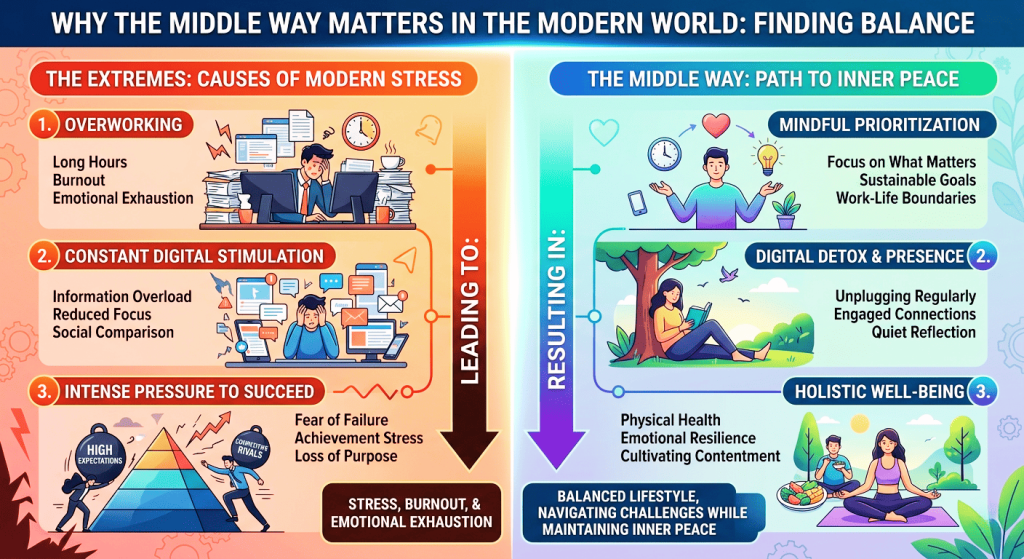
Modern life often encourages extremes—overworking, constant digital stimulation, and intense pressure to succeed.
These patterns can create stress, burnout, and emotional exhaustion.
The Middle Way offers a powerful alternative.
By practicing moderation, mindfulness, and compassion, individuals can create a balanced lifestyle that supports mental well-being and spiritual development.
This ancient teaching remains deeply relevant today, helping people navigate modern challenges while maintaining inner peace.
Conclusion
Understanding the Middle Way of Buddhism and how it supports spiritual awakening can transform the way individuals approach life.
Instead of chasing pleasure or forcing extreme discipline, the Middle Way encourages a balanced approach that nurtures wisdom, compassion, and mindfulness.
By applying this philosophy to everyday choices—how we work, eat, communicate, and reflect—we create conditions for deeper self-awareness and lasting inner peace.
Spiritual awakening does not require dramatic extremes. Often, it begins with simple balance.
Call to Action
If you want to begin experiencing the benefits of the Middle Way, start with small steps:
Practice mindfulness, observe your habits, and cultivate balance in your daily life. Over time, these mindful choices can guide you toward greater clarity, peace, and spiritual awakening.