What Is the Noble Eightfold Path of Buddhism, and How Does It Support Spiritual Awakening in 2026?
Introduction
In recent years, many people have begun searching for deeper meaning in life. Stress, constant digital distractions, and the pressure of modern living often create a feeling that something essential is missing. As a result, more individuals are exploring practices that encourage mindfulness, inner peace, and spiritual awakening.
One ancient philosophy that continues to guide people toward personal transformation is Buddhism. At the heart of Buddhist teachings lies a practical framework known as the Noble Eightfold Path. This path provides a structured yet flexible approach to living with wisdom, compassion, and awareness.
But what exactly is the Noble Eightfold Path, and how does it support spiritual awakening?
In this guide, we’ll explore the meaning of the Noble Eightfold Path of Buddhism, its eight core principles, and how these teachings can help modern individuals cultivate clarity, balance, and inner growth.
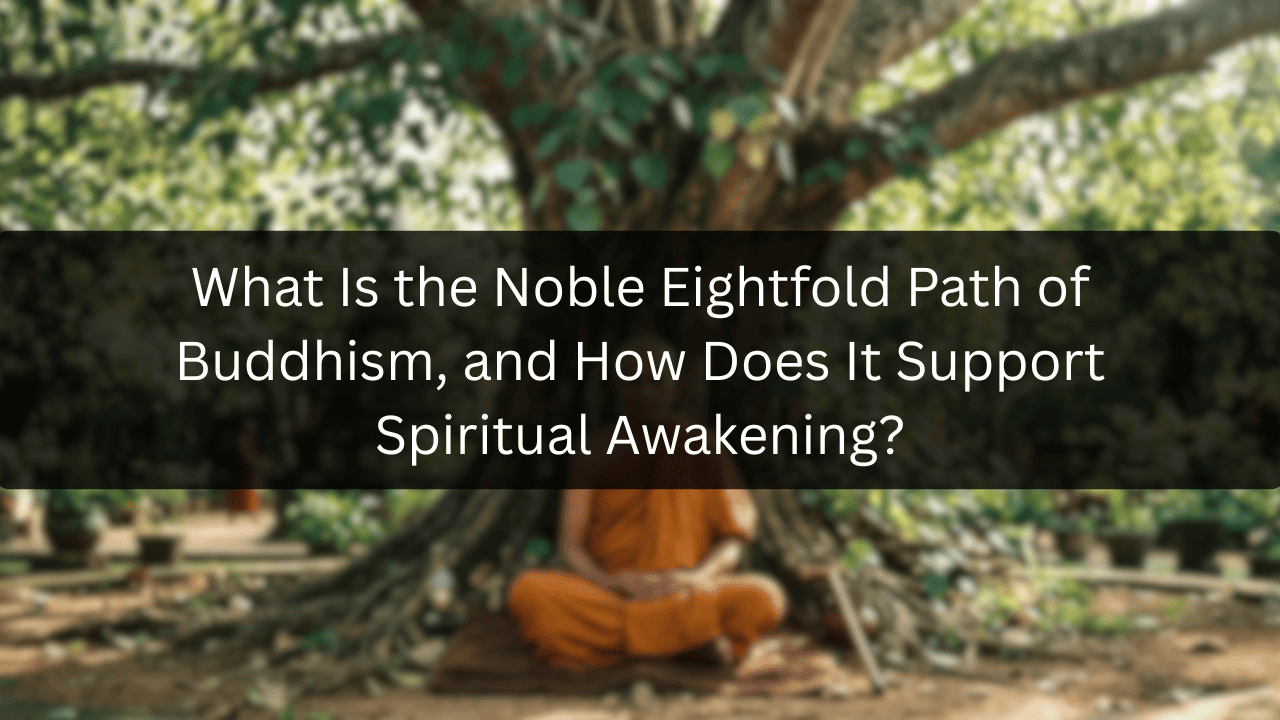
What Is the Noble Eightfold Path of Buddhism, and How Does It Support Spiritual Awakening?
The Noble Eightfold Path is one of the most important teachings in Buddhism. It is a set of eight guiding principles designed to help individuals overcome suffering and achieve spiritual awakening.
Rather than a rigid set of commandments, the Eightfold Path is better understood as a practical guide for ethical living, mental discipline, and wisdom.
The Buddha introduced this path as the way to overcome dukkha, a term often translated as suffering, dissatisfaction, or stress. According to Buddhist philosophy, suffering arises from attachment, ignorance, and craving.
The Noble Eightfold Path provides a clear method for addressing these root causes.
Importantly, the eight elements are not meant to be followed in a strict sequence. Instead, they are interconnected practices that reinforce one another. As people cultivate mindfulness, ethical behavior, and clear understanding, they gradually develop deeper awareness and spiritual insight.
The Origin of the Noble Eightfold Path in Buddhism
The Buddha’s Teaching After Enlightenment
The Noble Eightfold Path originates from the teachings of Siddhartha Gautama, who later became known as the Buddha.
After achieving enlightenment through deep meditation and reflection, the Buddha shared his insights with others. His first teachings introduced the Four Noble Truths, which describe:
- The existence of suffering in life
- The causes of suffering
- The possibility of ending suffering
- The path that leads to the end of suffering
The Noble Eightfold Path represents the fourth truth—the practical method for overcoming suffering and reaching liberation.
Why the Noble Eightfold Path Is Central to Buddhist Practice
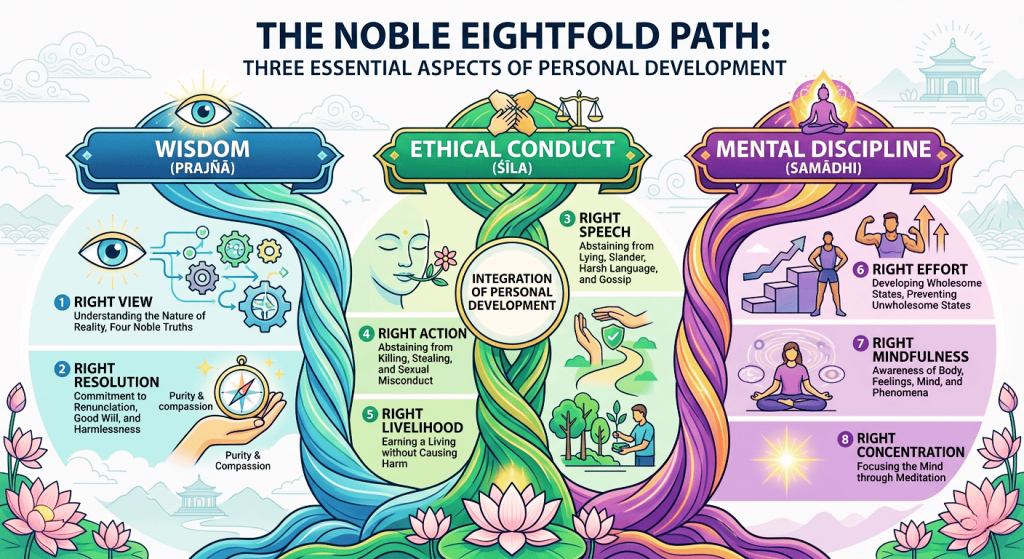
The Eightfold Path is central to Buddhism because it offers a balanced approach to life. Rather than promoting extreme asceticism or indulgence, the Buddha described his teachings as the Middle Way.
This balanced path integrates three essential aspects of personal development:
- Wisdom (Prajñā)
- Ethical Conduct (Śīla)
- Mental Discipline (Samādhi)
Together, these elements create a holistic system that encourages individuals to transform both their inner mindset and their outward actions.
The Eight Elements of the Noble Eightfold Path Explained
Each element of the Noble Eightfold Path contributes to spiritual growth in a unique way.
1. Right View (Understanding Reality)
Right View refers to understanding the true nature of life.
This includes recognizing that everything is impermanent and that attachment to temporary things can lead to suffering. By developing a clear understanding of reality, individuals begin to see beyond illusions and cultivate deeper wisdom.
Right View is often considered the foundation of the entire path.
2. Right Intention (Pure Motivation)
Right Intention focuses on developing wholesome motivations and attitudes.
This includes:
- Letting go of harmful desires
- Cultivating compassion
- Practicing kindness toward others
When intentions are rooted in goodwill rather than ego or selfishness, our actions naturally become more ethical and mindful.
3. Right Speech (Mindful Communication)
Speech has a powerful impact on relationships and personal well-being.
Right Speech encourages individuals to avoid:
- Lying
- Gossip
- Harsh or abusive language
- Meaningless chatter
Instead, it promotes truthful, kind, and constructive communication.
Practicing mindful speech creates stronger relationships and fosters a more peaceful environment.
4. Right Action (Ethical Behavior)
Right Action involves behaving in ways that avoid harm and promote well-being.
In Buddhism, this often includes principles such as:
- Respecting life
- Avoiding theft
- Practicing honesty
- Maintaining integrity
Ethical behavior not only benefits others but also creates a sense of inner harmony.
5. Right Livelihood (Ethical Work)
Right Livelihood emphasizes choosing a profession that does not harm others.
This means avoiding careers that involve exploitation, violence, or unethical practices. Instead, work should contribute positively to society and align with one’s values.
When people engage in meaningful and ethical work, it supports both personal fulfillment and spiritual growth.
6. Right Effort (Positive Mental Development)
Right Effort focuses on cultivating healthy mental states.
This includes:
- Preventing negative thoughts from arising
- Letting go of harmful emotions
- Encouraging positive qualities such as compassion and patience
Spiritual awakening requires consistent effort to nurture beneficial mental habits.
7. Right Mindfulness (Present-Moment Awareness)
Mindfulness has become widely recognized around the world, but its roots lie deeply within Buddhist teachings.
Right Mindfulness involves paying attention to the present moment with clarity and acceptance. This awareness can include:
- Observing thoughts and emotions
- Being aware of physical sensations
- Practicing conscious breathing
Through mindfulness, individuals learn to observe their experiences without becoming overwhelmed by them.
8. Right Concentration (Deep Meditation)
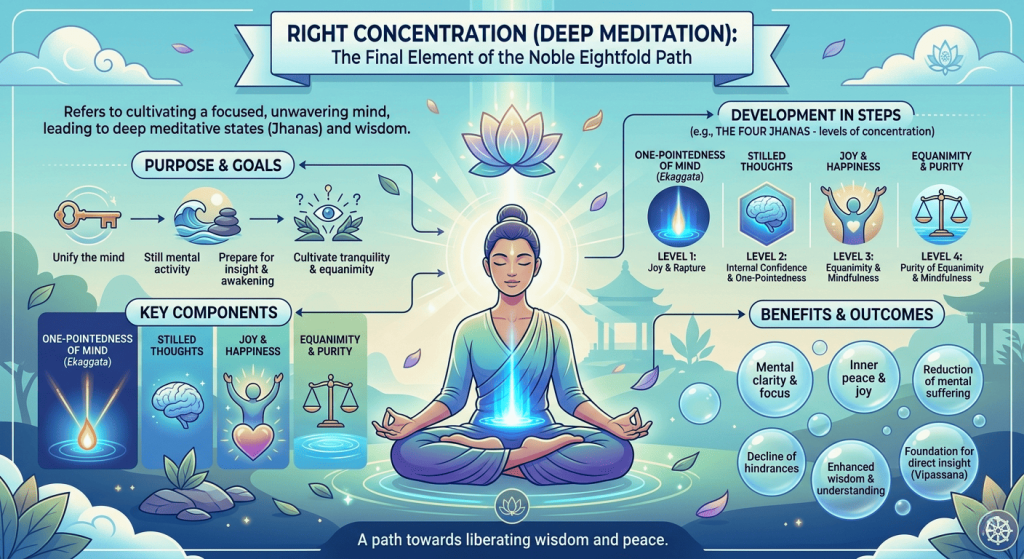
The final element of the Noble Eightfold Path is Right Concentration, which refers to deep states of meditation.
Meditation strengthens focus and helps quiet the constant chatter of the mind. As concentration deepens, individuals may experience greater insight, calmness, and clarity.
Regular meditation practice supports the development of wisdom and spiritual awareness.
How the Noble Eightfold Path Supports Spiritual Awakening
The Noble Eightfold Path provides more than philosophical guidance—it offers a practical approach to transforming the mind and awakening deeper awareness.
Encourages Self-Awareness
One of the most powerful benefits of the Eightfold Path is increased self-awareness.
By practicing mindfulness and reflection, individuals become more conscious of their thoughts, emotions, and behaviors. This awareness is essential for spiritual growth.
Reduces Suffering and Mental Stress
Many people experience stress because of attachment, fear, or unrealistic expectations.
The teachings of the Eightfold Path encourage letting go of unhealthy attachments and cultivating acceptance. As a result, individuals often experience greater emotional stability and peace.
Develops Compassion and Wisdom
Compassion is a central value in Buddhist philosophy.
Practices such as Right Intention and Right Action encourage empathy, kindness, and understanding toward others. Over time, these qualities foster deeper wisdom and a stronger connection with the world.
Aligns the Mind, Speech, and Actions
Spiritual awakening often occurs when a person’s thoughts, words, and actions become aligned.
The Eightfold Path promotes this harmony by encouraging ethical behavior, mindful communication, and conscious awareness. When these elements work together, life becomes more balanced and meaningful.
Practical Ways to Apply the Noble Eightfold Path in Daily Life
Although the Noble Eightfold Path originates from ancient teachings, its principles remain highly relevant today.
Here are some simple ways to incorporate these practices into modern life.
Practice Mindful Communication
Before speaking, pause for a moment and consider whether your words are truthful, helpful, and kind.
This simple habit can dramatically improve relationships and reduce unnecessary conflict.
Integrate Meditation into Your Routine
You don’t need hours of meditation to benefit from mindfulness.
Even 10–15 minutes of daily meditation can help calm the mind, improve focus, and increase awareness.
Make Ethical Lifestyle Choices
Consider how your daily actions affect others.
From professional decisions to personal habits, choosing compassion and integrity supports both personal growth and collective well-being.
Cultivate Compassion
Small acts of kindness can have a profound impact.
Helping others, practicing gratitude, and showing empathy all contribute to a more compassionate mindset.
Common Misconceptions About the Noble Eightfold Path
Despite its popularity, several misunderstandings about the Eightfold Path still exist.
It Is Not a Strict Religious Rulebook
Some people assume the path is a rigid set of rules.
In reality, it is a flexible guide for personal development that individuals can adapt to their lives.
It Is Not Only for Monks
The teachings of Buddhism are often associated with monks and monasteries, but the Eightfold Path was designed for everyone.
Anyone interested in mindfulness, ethical living, and self-awareness can benefit from these principles.
Spiritual Awakening Is a Gradual Process
Awakening does not happen overnight.
The Noble Eightfold Path encourages steady progress through consistent practice and reflection.
Over time, small changes lead to profound transformation.
Benefits of Following the Noble Eightfold Path
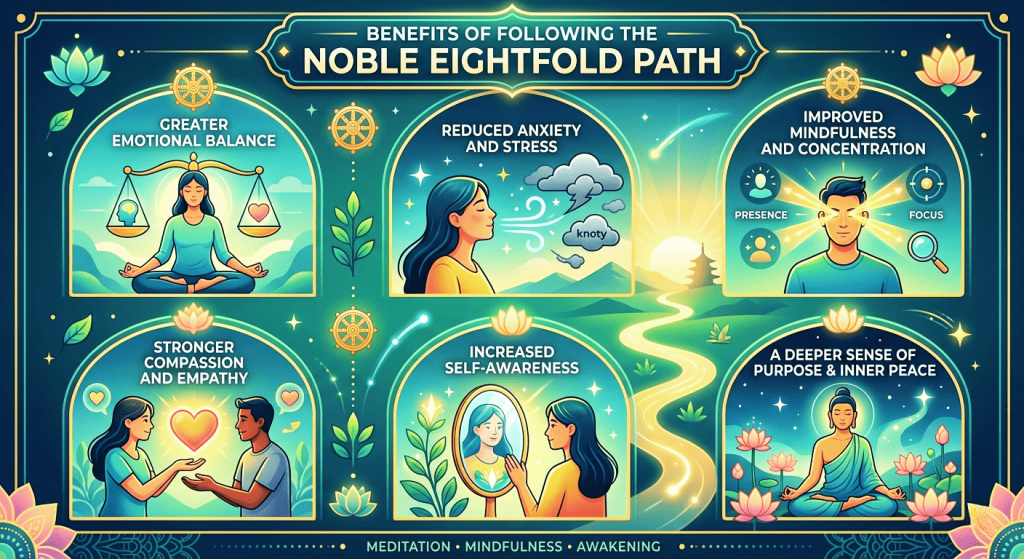
Practicing the Noble Eightfold Path can bring many meaningful benefits, including:
- Greater emotional balance
- Reduced anxiety and stress
- Improved mindfulness and concentration
- Stronger compassion and empathy
- Increased self-awareness
- A deeper sense of purpose and inner peace
These benefits make the Eightfold Path not only a spiritual philosophy but also a practical guide for modern well-being.
Conclusion
The Noble Eightfold Path of Buddhism offers a timeless roadmap for anyone seeking spiritual awakening and personal transformation.
By cultivating wisdom, ethical conduct, and mindful awareness, individuals can gradually reduce suffering and develop a deeper understanding of themselves and the world around them.
In a world that often feels chaotic and overwhelming, the principles of the Eightfold Path provide clarity, balance, and peace.
Spiritual awakening does not require dramatic changes or extreme practices. Sometimes it begins with small steps—speaking kindly, practicing mindfulness, and making conscious choices each day.
Call to Action
If you are interested in exploring spiritual awakening, start by applying one element of the Noble Eightfold Path in your daily routine. Even a few minutes of mindfulness or meditation each day can create meaningful change over time.