What Is Buddhism and How It Supports Spiritual Awakening – A Beginner’s Guide – 2026
Introduction
In recent years, more people have started searching for deeper meaning beyond material success and daily stress. Many individuals are turning to ancient wisdom traditions to find inner peace, clarity, and a stronger connection with themselves. One of the most widely respected spiritual traditions that supports this journey is Buddhism.
But many beginners often ask an important question: What is Buddhism and how does it support spiritual awakening?
Buddhism is not simply a religion filled with rituals or beliefs. Instead, it is a practical path for understanding the mind, reducing suffering, and awakening to the true nature of reality. For over 2,500 years, Buddhist teachings have helped millions of people cultivate mindfulness, compassion, and deep inner awareness.
In this guide, we will explore what Buddhism is, its core teachings, and how its practices can support spiritual awakening in modern life. Whether you are completely new to spirituality or already exploring mindfulness and meditation, understanding Buddhism can offer powerful insights for personal growth.
What Is Buddhism and How It Supports Spiritual Awakening?
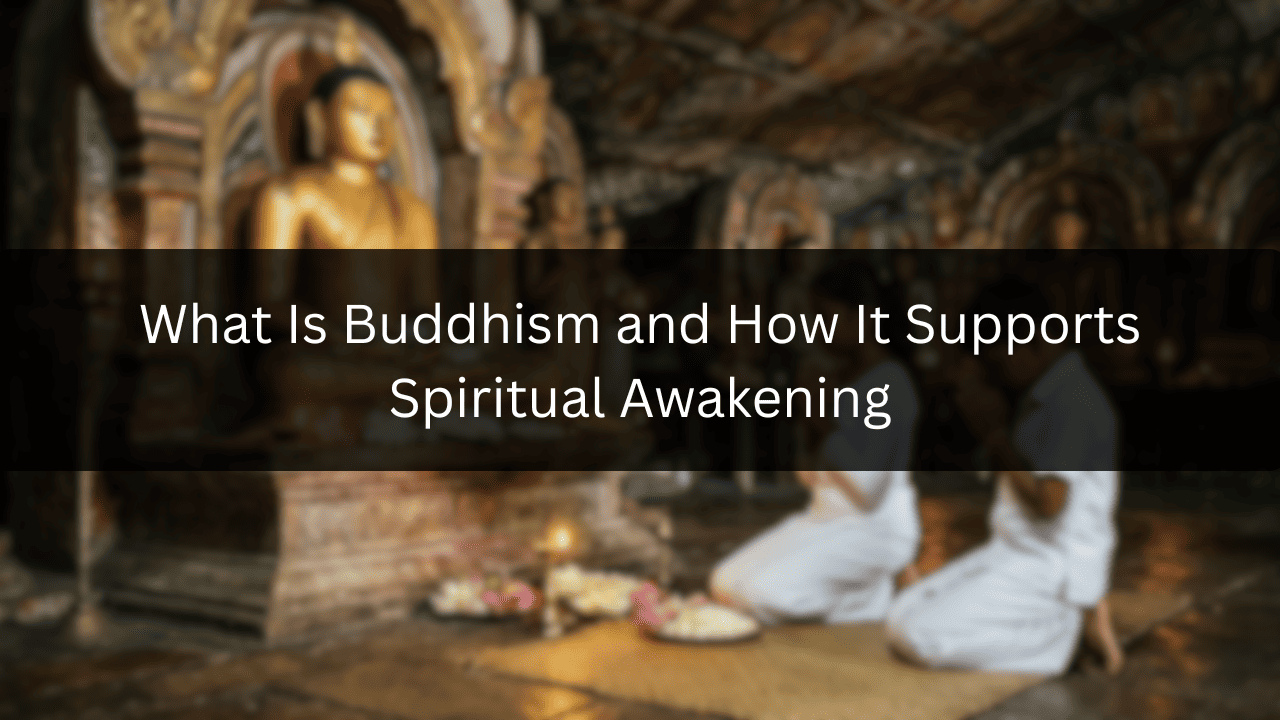
Buddhism is a spiritual tradition that focuses on awakening the mind to see reality clearly and live free from unnecessary suffering. It began more than 2,500 years ago in South Asia through the teachings of Siddhartha Gautama, who later became known as the Buddha.
The word Buddha means “the awakened one.” It refers to someone who has fully understood the nature of life, suffering, and the human mind.
At its core, Buddhism teaches that many of our problems come from:
- Attachment
- Desire
- Ignorance about reality
When people become overly attached to possessions, expectations, or even their own identity, they often experience stress, disappointment, and emotional pain.
Buddhism provides tools to overcome these patterns. Through practices such as mindfulness, meditation, and ethical living, individuals gradually awaken to a deeper understanding of themselves and the world around them.
In this sense, Buddhism supports spiritual awakening by helping people:
- Become aware of their thoughts and emotions
- Let go of unhealthy attachments
- Cultivate compassion and wisdom
- Experience inner peace and clarity
Rather than asking followers to blindly believe teachings, Buddhism encourages individuals to explore truth through direct experience and mindful awareness.
The Origins of Buddhism and the Journey of the Buddha
To understand Buddhism more deeply, it helps to look at the life story of the person who founded it.
The Life of Siddhartha Gautama
Siddhartha Gautama was born around the 5th century BCE into a royal family in what is now Nepal. As a prince, he lived a life of luxury, comfort, and protection from the hardships of the outside world.
His father wanted him to grow up as a powerful ruler, so he ensured that Siddhartha was surrounded only by beauty and pleasure. However, as Siddhartha grew older, he became curious about the world beyond the palace.
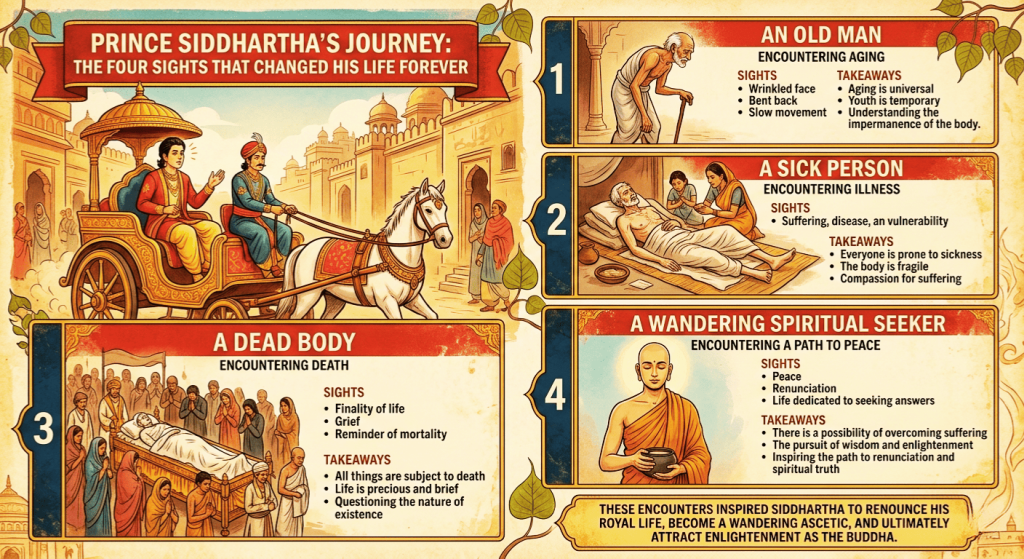
During several journeys outside the palace walls, he encountered four sights that changed his life forever:
- An old man
- A sick person
- A dead body
- A wandering spiritual seeker
These experiences made him realize that suffering, aging, illness, and death are unavoidable parts of human life. Determined to find a solution to suffering, Siddhartha left his royal life behind and began a spiritual quest.
After years of intense meditation and self-discipline, he finally achieved enlightenment while meditating under the Bodhi tree. In that moment, he gained profound insight into the nature of existence and the causes of human suffering.
From that day forward, he became known as the Buddha, or “the awakened one.”
The Birth of a Spiritual Path
After attaining enlightenment, the Buddha spent the rest of his life teaching others how they too could awaken. He traveled across northern India sharing practical guidance on meditation, ethics, and wisdom.
His teachings eventually spread across Asia and later throughout the world, becoming one of the most influential spiritual traditions in human history.
Core Buddhist Teachings That Support Spiritual Awakening
Buddhism offers several key teachings that help individuals understand life more clearly and move toward spiritual awakening.
The Four Noble Truths
The foundation of Buddhist philosophy is known as the Four Noble Truths. These truths explain the nature of suffering and the path to freedom.
1. The Truth of Suffering (Dukkha)
Life includes suffering, dissatisfaction, and discomfort. Even pleasurable experiences are temporary and eventually change.
2. The Cause of Suffering
Suffering arises from craving, attachment, and ignorance. When people cling to things that constantly change, they create stress and disappointment.
3. The End of Suffering
It is possible to overcome suffering by letting go of attachments and seeing reality clearly.
4. The Path to the End of Suffering
The Buddha taught a practical system known as the Noble Eightfold Path, which guides people toward liberation and awakening.
These truths do not present a pessimistic view of life. Instead, they offer a clear and compassionate understanding of the human experience.
The Noble Eightfold Path
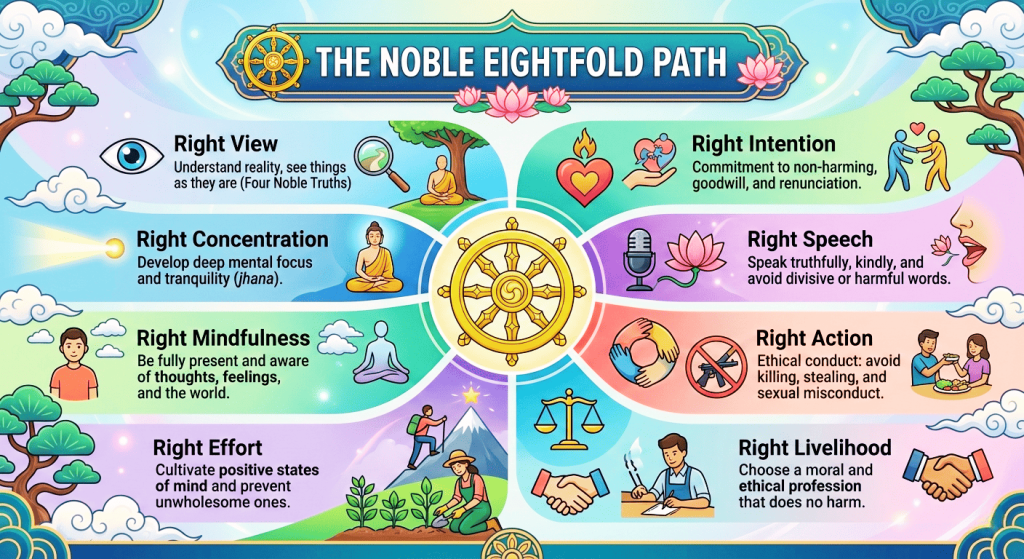
The Noble Eightfold Path provides a practical framework for living a mindful and ethical life.
It includes eight interconnected practices:
- Right View – understanding the nature of reality
- Right Intention – cultivating positive motivation
- Right Speech – speaking truthfully and kindly
- Right Action – behaving ethically and responsibly
- Right Livelihood – earning a living without harming others
- Right Effort – developing positive mental states
- Right Mindfulness – maintaining awareness of the present moment
- Right Concentration – developing deep meditation and mental focus
By gradually practicing these principles, individuals develop wisdom, compassion, and inner balance, which support spiritual awakening.
Key Buddhist Practices That Lead to Spiritual Awakening
Buddhism is not only about philosophical ideas. It also includes practical techniques that help transform the mind.
Mindfulness Meditation
One of the most well-known Buddhist practices is mindfulness meditation.
Mindfulness involves paying close attention to the present moment without judgment. During meditation, individuals observe their breath, thoughts, and sensations with calm awareness.
Over time, this practice helps people:
- Become less controlled by automatic thoughts
- Develop emotional stability
- Reduce stress and anxiety
- Gain deeper insight into their mental patterns
Mindfulness meditation has become extremely popular in modern psychology and wellness programs because of its powerful mental health benefits.
Compassion and Loving-Kindness
Another essential aspect of Buddhism is the cultivation of compassion.
The Buddha taught that spiritual awakening naturally leads to kindness toward all living beings. As individuals become more aware of their own suffering, they also become more sensitive to the suffering of others.
A popular practice used to develop compassion is Loving-Kindness Meditation (Metta). During this meditation, practitioners silently repeat phrases wishing happiness and well-being for themselves and others.
Examples include:
- “May I be happy.”
- “May you be safe.”
- “May all beings live with peace.”
These practices gradually open the heart and strengthen empathy.
Living with Mindful Awareness
Buddhist practice is not limited to meditation sessions. In fact, the goal is to bring mindfulness into everyday life.
Simple mindful habits include:
- paying attention while eating
- listening carefully during conversations
- walking slowly and consciously
- noticing emotions without reacting immediately
When people live with mindful awareness, even ordinary activities become opportunities for spiritual growth.
How Buddhism Supports Spiritual Awakening in Modern Life
Although Buddhism began thousands of years ago, its teachings remain extremely relevant today.
Modern life often involves constant distractions, stress, and pressure to achieve more. Many people feel overwhelmed by work, relationships, and information overload.
Buddhist practices offer powerful tools for navigating these challenges.
For example, mindfulness meditation can help people:
- calm their nervous system
- reduce anxiety
- improve focus
- develop emotional resilience
Many therapists and psychologists now integrate mindfulness-based techniques into mental health treatment. Programs such as mindfulness-based stress reduction (MBSR) are widely used to improve well-being.
In addition, Buddhist teachings encourage individuals to find meaning beyond material success. Instead of chasing endless desires, practitioners learn to appreciate simplicity, presence, and compassion.
This shift in perspective often leads to a deeper sense of fulfillment and inner peace.
Signs of Spiritual Awakening Through Buddhist Practice
Spiritual awakening is usually a gradual process rather than a single dramatic event. As people continue practicing Buddhist principles, they may begin to notice certain changes in their lives.
Common signs of spiritual growth include:
Greater Inner Peace
Situations that once caused intense stress may no longer feel overwhelming.
Reduced Attachment to Ego
People become less concerned about constantly proving themselves or seeking validation.
Increased Compassion
There is a stronger desire to help others and reduce suffering.
Clearer Awareness
Individuals become more aware of their thoughts, emotions, and behaviors.
Living More in the Present Moment
Instead of worrying about the past or future, people learn to fully experience the present.
These shifts reflect the gradual awakening of wisdom and awareness.
Simple Steps to Begin Your Buddhist Spiritual Awakening Journey
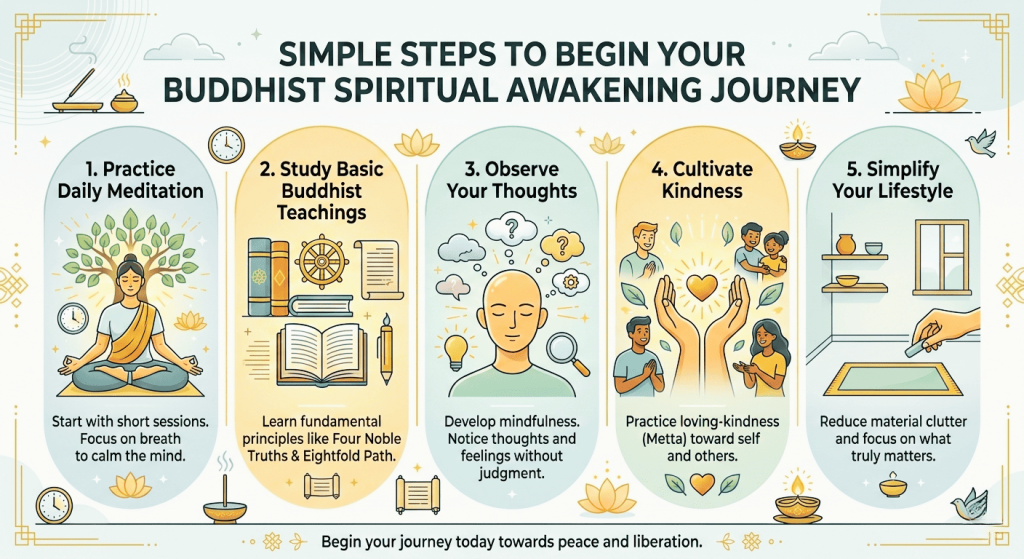
You do not need to become a monk or join a monastery to explore Buddhist teachings. Anyone can begin applying these principles in daily life.
Here are some simple ways to start.
Practice Daily Meditation
Even five to ten minutes of quiet breathing meditation each day can help develop mindfulness.
Study Basic Buddhist Teachings
Reading books or listening to teachings about mindfulness and compassion can deepen understanding.
Observe Your Thoughts
Instead of reacting automatically, try noticing thoughts and emotions as they arise.
Cultivate Kindness
Small acts of kindness toward others strengthen compassion and connection.
Simplify Your Lifestyle
Reducing unnecessary distractions can create space for clarity and peace.
Consistency is more important than perfection. Small steps practiced regularly can lead to profound transformation over time.
Conclusion: Buddhism as a Path to Inner Freedom
Buddhism offers a timeless path for those seeking spiritual awakening, inner peace, and deeper understanding of life. Through its teachings on mindfulness, compassion, and wisdom, Buddhism helps individuals recognize the causes of suffering and discover practical ways to overcome them.
Rather than demanding blind faith, Buddhism encourages personal exploration and direct experience. By observing the mind, practicing meditation, and living ethically, anyone can begin moving toward greater awareness and freedom.
In a world filled with distractions and stress, the wisdom of Buddhism provides a powerful reminder that true peace begins within.
Call to Action
If you are curious about spiritual growth, consider starting with a simple daily mindfulness practice. Even a few minutes of meditation each day can open the door to deeper awareness, compassion, and lasting inner peace.
Your journey toward spiritual awakening can begin today—one mindful breath at a time.