
Core Yoga Techniques for Spiritual Awakening – 2026
Spiritual awakening is often described as a gradual shift in awareness—a deeper understanding of oneself, the mind, and the nature of reality. While many spiritual traditions offer different paths to awakening, yoga remains one of the most practical and time-tested systems for inner transformation.
In its true sense, yoga is far more than physical exercise. It is a holistic discipline that integrates breath, body, mind, and consciousness. Through consistent practice, yoga helps individuals develop clarity, emotional balance, and inner stillness—key ingredients for spiritual growth.
The techniques below represent some of the most powerful core yoga practices for spiritual awakening. They are beginner-friendly, accessible to anyone, and can easily be incorporated into daily life. Over time, these practices create a foundation for deeper self-awareness and inner peace.
1. Mindful Breathing (Pranayama)
Breathing is one of the most powerful tools in yoga. In fact, the word pranayama refers to the conscious control of breath in order to influence the flow of life energy—often called prana—within the body.
Most people breathe automatically and often very shallowly, especially during stressful situations. Shallow breathing keeps the nervous system in a state of tension. Mindful breathing, on the other hand, slows the breath and gently brings the mind into the present moment.
When breathing becomes calm and rhythmic, the mind naturally begins to settle. This makes pranayama one of the most important foundational practices for spiritual awakening.
Simple Pranayama Practices
Beginners can start with a few simple breathing techniques.
Deep Diaphragmatic Breathing
- Sit comfortably in a relaxed position.
- Inhale slowly through the nose.
- Allow the belly to expand naturally as the lungs fill with air.
- Exhale slowly and gently through the nose.
This technique encourages deeper breathing and activates the body’s relaxation response.
Alternate Nostril Breathing (Nadi Shodhana)
- Close the right nostril with your thumb.
- Inhale slowly through the left nostril.
- Close the left nostril with your finger.
- Exhale through the right nostril.
- Continue alternating sides.
This practice is believed to balance the left and right hemispheres of the brain, promoting mental clarity and emotional balance.
Benefits of Pranayama
Regular breathing practice can:
- Reduce anxiety and stress
- Improve mental clarity and focus
- Increase emotional stability
- Calm the nervous system
- Prepare the mind for meditation
Because breath directly influences both the mind and body, pranayama is considered one of the most effective yoga techniques for spiritual awakening.
2. Meditation (Dhyana)
Meditation is often described as the heart of spiritual awakening. While yoga postures prepare the body and pranayama calms the nervous system, meditation allows the mind to settle into stillness.
In everyday life, the mind constantly jumps from one thought to another. Meditation trains the mind to become aware of these thoughts without being controlled by them. Over time, practitioners begin to experience a space between awareness and mental activity.
This shift in awareness is a key step on the path to spiritual awakening.
How to Practise Meditation
A simple meditation practice can be done in just a few steps:
- Sit comfortably with a straight spine.
- Close your eyes and relax your shoulders.
- Focus your attention on your breathing.
- When thoughts arise, gently return your attention to the breath.
It is important to understand that meditation is not about eliminating thoughts. Instead, it is about observing them with calm awareness.
Even a short daily practice—10 to 15 minutes—can gradually transform the way the mind functions.
Benefits of Meditation
Regular meditation can help:
- Increase self-awareness
- Improve emotional regulation
- Reduce stress and overthinking
- Develop mental clarity
- Cultivate inner peace
Over time, meditation allows individuals to experience moments of deep stillness and insight, which are often associated with spiritual awakening.
3. Yoga Postures (Asanas)
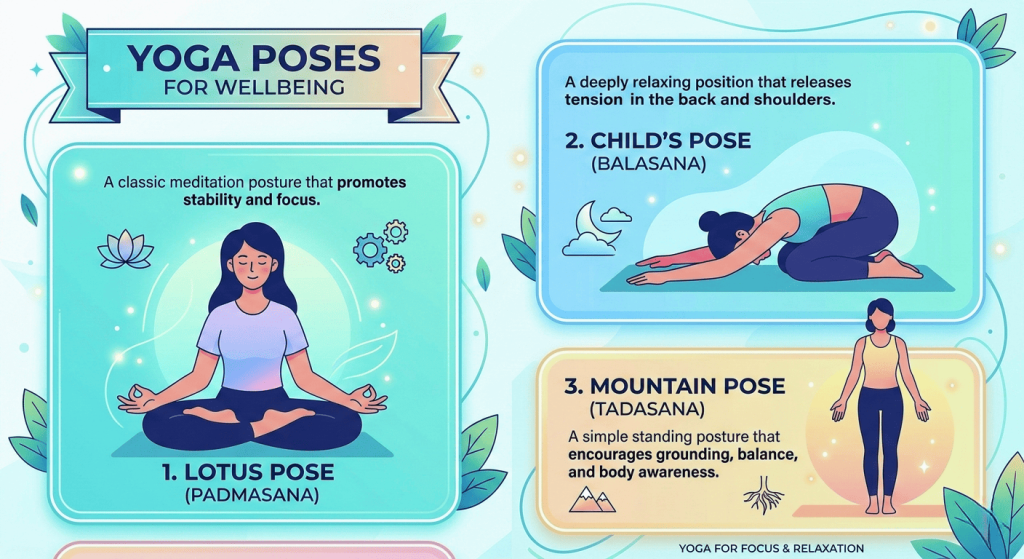
Many people associate yoga mainly with physical poses, also known as asanas. While these movements improve flexibility and strength, their deeper purpose is to prepare the body for meditation.
A tense or restless body makes it difficult to sit quietly for long periods. Yoga postures help release physical tension and create stability within the body.
When the body becomes relaxed and balanced, it becomes much easier to enter deeper states of meditation.
Beginner-Friendly Yoga Poses
Some poses that support spiritual practice include:
Lotus Pose (Padmasana)
A classic meditation posture that promotes stability and focus.
Child’s Pose (Balasana)
A deeply relaxing position that releases tension in the back and shoulders.
Mountain Pose (Tadasana)
A simple standing posture that encourages grounding, balance, and body awareness.
Even simple yoga poses practiced slowly and mindfully can bring attention into the present moment.
Benefits of Asanas
Practising yoga postures regularly can:
- Release physical tension
- Improve posture and flexibility
- Increase body awareness
- Support deeper breathing
- Strengthen the mind-body connection
These physical benefits create a strong foundation for deeper spiritual practices.
4. Self-Observation and Mindfulness
Another powerful technique for spiritual awakening is mindfulness, the practice of observing thoughts and emotions without judgment.
In everyday life, people often react automatically to situations. Emotions arise quickly, and reactions follow without much awareness. Mindfulness introduces a pause between stimulus and reaction.
This pause allows individuals to respond consciously instead of reacting impulsively.
Practicing Mindfulness in Daily Life
Mindfulness does not need to be limited to meditation sessions. It can be practiced throughout daily activities.
Simple ways to practice mindfulness include:
- Noticing your breathing during stressful moments
- Observing thoughts without identifying with them
- Paying attention while walking, eating, or working
- Becoming aware of emotional reactions
By becoming more aware of internal patterns, individuals gradually develop deeper insight into their thoughts, habits, and behaviors.
Benefits of Mindfulness
Mindfulness helps:
- Reduce emotional reactivity
- Increase clarity and awareness
- Improve focus and concentration
- Encourage conscious decision-making
- Develop a deeper understanding of the self
Over time, this awareness naturally supports spiritual growth and awakening.
5. Mantra Chanting

Mantras are sacred sounds or phrases repeated during meditation. In yogic traditions, sound is believed to have a powerful influence on consciousness.
Certain vibrations can calm the mind, balance emotions, and create a sense of inner harmony.
One of the most well-known mantras is “Om,” which is considered the universal sound of creation.
How Mantra Chanting Works
During mantra practice:
- A word or phrase is repeated aloud or silently.
- The sound vibration influences the nervous system.
- Mental activity gradually slows down.
- Attention becomes focused and centred.
Because the mind naturally responds to rhythm and sound, mantra chanting can quickly bring a sense of calm.
Common Mantras
Some commonly used mantras include:
- Om
- So Hum
- Gayatri Mantra
Each mantra carries a symbolic meaning and spiritual significance.
Benefits of Mantra Practice
Mantra chanting can:
- Quiet mental chatter
- Improve concentration
- Create emotional balance
- Promote relaxation
- Support deeper meditation states
For many practitioners, mantra repetition becomes a gateway to deeper spiritual experiences.
6. Yogic Ethical Principles (Yamas and Niyamas)
Spiritual awakening is not only about meditation or breathing exercises. Yoga also emphasizes ethical living as an essential part of inner transformation.
The classical yoga system describes moral guidelines known as the Yamas and Niyamas. These principles help individuals live in alignment with higher values.
The Yamas (Ethical Restraints)
The Yamas guide how we interact with the world around us:
- Ahimsa – Non-violence and compassion
- Satya – Truthfulness
- Asteya – Non-stealing
- Brahmacharya – Responsible use of energy
- Aparigraha – Non-attachment
The Niyamas (Personal Observances)
The Niyamas focus on personal discipline and self-growth:
- Saucha – Purity and cleanliness
- Santosha – Contentment
- Tapas – Self-discipline
- Svadhyaya – Self-study
- Ishvara Pranidhana – Surrender to a higher consciousness
Why Ethics Matter in Spiritual Awakening
Living according to these principles reduces inner conflict and mental stress. When the mind is free from guilt, dishonesty, or negativity, it becomes easier to experience peace and clarity.
For this reason, the Yamas and Niyamas are often considered the ethical foundation of the spiritual path.
7. Self-Inquiry (Svadhyaya)
Self-inquiry is another powerful technique for spiritual awakening. In yoga philosophy, this practice is known as Svadhyaya, which means self-study or inner reflection.
Many people live most of their lives reacting to external events without questioning their inner beliefs, fears, or conditioning. Self-inquiry encourages individuals to explore the deeper layers of the mind.
How Self-Inquiry Works
This practice involves asking meaningful questions such as:
- Who am I beyond my thoughts and emotions?
- What beliefs shape my behavior?
- Why do certain situations trigger strong reactions?
Journaling, contemplation, and reflective meditation are often used to support self-inquiry.
Benefits of Self-Inquiry
Regular self-reflection can:
- Increase self-awareness
- Reveal unconscious thought patterns
- Encourage personal growth
- Reduce ego-driven reactions
- Support deeper spiritual understanding
Through self-inquiry, individuals gradually begin to see beyond their conditioned identity. This deeper awareness is often described as a key stage of spiritual awakening.
Conclusion

Yoga offers a comprehensive path toward spiritual awakening by addressing every aspect of human experience—the body, breath, mind, and consciousness.
Practices such as pranayama, meditation, yoga postures, mindfulness, mantra chanting, ethical living, and self-inquiry work together to create inner balance and clarity.
The most important element in this journey is consistency. Even simple daily practices—such as mindful breathing or a short meditation session—can gradually transform the way we experience life.
Spiritual awakening is not a sudden event for most people. Instead, it unfolds slowly through awareness, patience, and dedication.
By integrating these core yoga techniques into everyday life, anyone can begin the journey toward greater self-understanding, inner peace, and spiritual growth.